
Cracked Flue Tiles After a Chimney Fire: How to Evaluate the Next Step
Cracked flue tiles in a tall Connecticut chimney? Document the full route and possible fire damage before comp…
Wood systems & venting
Open hearth or wood insert for a Connecticut winter? Compare heat goals, the existing chimney, liner design, local permit, and daily maintenance.
Call 475-270-6677
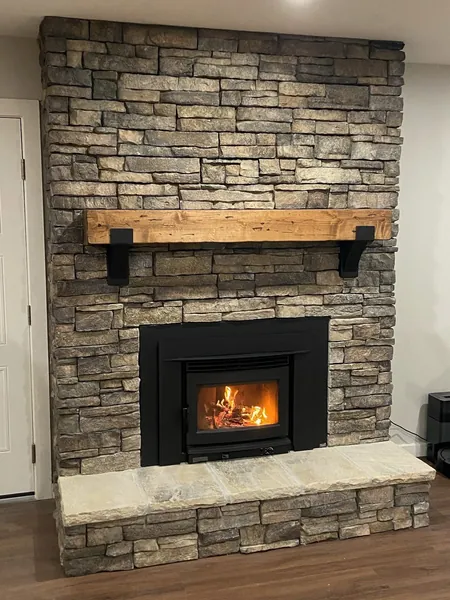
An open fireplace offers the sound and view many homeowners love. A wood-burning insert changes the experience: a contained appliance sits within an existing opening and uses a designed venting system. If someone suggests an insert because your old fireplace needs work, pause long enough to separate the condition of the chimney from your preferences about how you want to heat and use the room.
An insert is not a cover that makes damaged masonry or a cracked flue disappear. It may be an excellent appliance choice when correctly selected and installed, but it still needs an evaluated chimney, appropriate liner or venting arrangement, required clearances, and local approvals. The right decision starts with the existing fireplace and the homeowner's goals.
Some people use a fireplace only a few evenings each winter and value an open hearth more than supplemental heat. Others want a wood appliance that can provide a different heating experience and may be willing to operate doors, air controls, and a fan. Ask yourself how often the fire will be used, how much time you want to spend tending it, and what kind of maintenance fits your household.
The U.S. EPA describes certified wood-burning appliances and fireplace retrofit options as different from an open fireplace, including the potential to reduce smoke compared with conventional open burning. That does not mean every insert will perform the same way in every house, or that a particular model will meet every heating expectation. Product specifications, installation, wood quality, and the home's layout matter.
If you like the present appearance, ask whether the existing system can be maintained or repaired for continued use. If you want a sealed appliance, look at viewing area, controls, noise from any fan, clearances, and how the surround will meet the fireplace opening. Both choices deserve an honest explanation of their practical tradeoffs.
Before ordering an insert, ask for a chimney inspection that identifies the firebox, smoke chamber, flue, upper masonry, and any past water or heat damage. If a sweep reported cracked tiles after a suspected chimney fire, the current vent condition needs documentation. Installing a new appliance does not make the damaged system irrelevant.
The installer should explain what venting the insert manufacturer requires and how the existing chimney can accommodate it. A liner proposal should address material, size, route, connection, termination, and other installation requirements. Do not assume the old clay-tile passage can be used exactly as it stands, or that every insert needs the same six-inch liner. Chimney liner work is chosen for the actual appliance and structure.
Water intrusion matters too. An active leak at flashing or a deteriorated crown can affect the chimney long after a new insert looks perfect from the living room. Ask whether repair of masonry, roof-junction details, or a cap is included in the installation quote or is a separate project.
An insert occupies the firebox opening and can change how the hearth, mantel, surround, and access panels are used. The professional should measure the existing opening and hearth and check the proposed appliance's clearances and service access against its manual. A photograph alone cannot establish whether the unit fits or whether finish work will be needed.
Some homeowners assume an insert is a drop-in product delivered like a refrigerator. The venting and connection often make the job more involved. Ask what parts of the old fireplace remain, what will be cleaned or modified, how the liner is routed, and how the new appliance can be removed or serviced later if needed. Keep all installation and product documents with the house records.
The operating routine changes as well. A closed-door appliance has manufacturer-specific air controls, fuel recommendations, and maintenance. The EPA advises using seasoned wood and maintaining wood-burning systems. Ask the installer to show your household how to use the exact model and what inspection and cleaning schedule will be appropriate.
One quote may repair a damaged open fireplace; another may install a new insert but omit chimney water repairs or finish work. A lower headline number does not tell you which option is better. Ask for separate written scopes: required work to keep the current fireplace, and the complete work to install the chosen insert. That helps distinguish safety-related repairs from a desired upgrade.
If an insert is being offered as the only response to a cracked liner, ask why that appliance and its new venting system are appropriate and what happens to the underlying chimney condition. If you would rather keep an open hearth, ask whether a repair path exists and what limits apply. The inspection should inform the decision, not a sales preference.
Connecticut DEEP states that wood-burning appliance installations require local building-department permits and inspections. Ask who will apply for the permit, what the town must inspect, and whether any electrical work for a blower needs a separate qualified trade. Treat permits as part of the planned installation, not paperwork added after the appliance is installed.
Bring fireplace dimensions and photographs, but expect an on-site measurement before the final selection. Ask for the exact insert model, its installation manual, the venting design, and an explanation of required clearances. Discuss where the electrical supply would go if the model uses a fan or controls. Ask who will handle removal of old components and any masonry or finish repair.
Compare maintenance and use, not just appearance. Where will ashes be removed? What fuel does the manufacturer specify? What service access is available? How will the chimney and liner be inspected later? A unit that looks ideal in a display room has to fit the daily life of your house.
If the existing fireplace is unsafe to use, keep it out of service while deciding. A shopping decision does not change an inspector's finding. The professional should explain which work is necessary regardless of whether you choose the insert or repair the open hearth.
An insert comes with a model number, manual, service parts, and operating instructions. Store those records with the chimney inspection and installation documents. If the installer changes a damper, adds a liner, or modifies the hearth, note what was changed. A future owner should not assume the opening can be used again as an open wood fireplace simply by removing the appliance. Ask whether the proposed installation is reversible and what work would be required if the product is discontinued years from now.
If a fan is part of the design, ask whether the insert can be operated during a power outage and how the controls behave. Discuss ash removal, glass cleaning, and access for a future sweep. An appliance may give more control over the burn while also demanding a more specific maintenance routine. These practical details deserve as much attention as the showroom flame picture.
An open fireplace may be chosen for atmosphere; an insert may be chosen for a different heating experience. Neither should be sold with a blanket promise about room temperature or fuel savings. Ask what the selected appliance is rated to do, what fuel it needs, and how your home's layout affects expectations. If your main concern is a smoky open fireplace, establish the cause of smoke before assuming an insert will solve it. A blocked or damaged chimney requires attention regardless of the new product. Comparing two complete, realistic use scenarios will lead to a better decision than comparing a photograph of flames with a product brochure.
Before final payment, ask for the insert model, liner details, permit record, and operating demonstration. These documents are part of the installation, not optional extras to chase after a problem appears. Keep the old inspection too.
In a New Haven or Wallingford house with an open masonry hearth, an insert may appeal because the household wants a different heating routine during winter. Begin with the chimney's actual dimensions, condition, and roof termination, especially if the stack is tall and has not been inspected since the home was purchased. An insert's liner must be designed for the selected model and routed through this chimney; the permit and local inspection are part of the project in Connecticut. If the crown or flashing leaks, that exterior work is still relevant whether the owner retains an open fireplace or installs an insert. Ask for two complete scopes tied to the same inspection findings rather than assuming the upgrade solves every old-chimney issue.
Will an insert make an unsafe chimney safe? Not by itself. The structure and proposed venting must be evaluated and the installation must meet the selected appliance's requirements.
Can I switch back to an open fireplace later? That depends on how the original firebox and flue are altered and their condition. Ask about the long-term implications before installation.
Is a gas insert the same decision? No. Fuel, venting, qualified trades, controls, and permits differ. Decide which appliance type meets your goals before comparing products.
Will the insert heat the whole house? Do not assume so. The model's output and house layout determine the experience; ask for realistic expectations rather than a broad promise.
Do inserts still need chimney cleaning? Wood-burning inserts and their venting systems require inspection and maintenance, with cleaning as needed. Follow the appliance manufacturer's guidance and a professional evaluation.
Harold & Sons Chimney serves New Haven and towns from Stamford to Hartford. If you are deciding between repairing an open fireplace and installing a wood-burning insert, call 475-270-6677 or use the form below. Tell us what you want from the fire and what you know about the current chimney.
If this sounds like your situation, these pages explain the work involved.
Keep reading
Cracked flue tiles in a tall Connecticut chimney? Document the full route and possible fire damage before comp…

A basement wood furnace and two-story Connecticut chimney need more than an outlet measurement. Learn what a c…

Noise in a sealed Connecticut fireplace? Learn how to describe the sound, locate safe access, and check a high…
Chimney season is here
Tell us what you’ve seen — a stain, a smell, smoke in the room, or just a flue that hasn’t been checked in years. We start with the problem, not a sales pitch.
475-270-6677