
Cracked Flue Tiles After a Chimney Fire: How to Evaluate the Next Step
Cracked flue tiles in a tall Connecticut chimney? Document the full route and possible fire damage before comp…
Wood systems & venting
A basement wood furnace and two-story Connecticut chimney need more than an outlet measurement. Learn what a complete liner estimate checks.
Call 475-270-6677
“It's a two-story chimney and I need a six-inch liner for my wood furnace. Can you give me a price?” That is a clear, reasonable question from a homeowner. It is also more complicated than multiplying height by a per-foot liner price. The outlet dimension is one piece of the system. The appliance model, existing chimney passage, route, clearance, materials, and installation details all influence what is appropriate and what the work actually involves.
A wood furnace serves a different purpose from a decorative fireplace, and its vent is not an interchangeable tube. The U.S. Environmental Protection Agency notes that wood-burning equipment and its venting system must be sized and installed together to work properly. If smoke or combustion products cannot move as intended, a new liner chosen by diameter alone is no solution. Here is what to gather before asking for an estimate and what a qualified installer should establish on site.
Find the manufacturer and model of the wood furnace if possible. The rating plate and manual can identify the vent connector size and installation instructions. The type of fuel and the exact appliance design matter; do not assume a six-inch outlet from one unit means every six-inch liner product is suitable. If the furnace has been modified or connected to another heating system, tell the installer about those changes.
You do not need to remove a connector or open a hot appliance to get that information. Photograph the visible label, the furnace and surrounding area, and the accessible connector from a safe position. If you have a previous installer invoice or chimney report, keep it ready. The goal is to help the professional identify the system, not to perform your own installation assessment.
Ask how the proposed liner matches the manufacturer's instructions. “We always install this size” is a weaker answer than one that addresses the actual model and the chimney's condition. If the original manual is unavailable, the installer may need additional manufacturer information or an appropriate technical evaluation before finalizing a specification.
“Two stories” tells us roughly where the appliance starts and where the chimney ends. It does not give the total liner length, the actual internal dimensions, offsets, bends, access at the top, or how the liner will connect to the furnace. A chimney that appears straight from outside may have an offset inside. An older tile-lined flue might be too small in one spot for the proposed insulated liner assembly, even if a measurement at the opening looks generous.
The exterior also needs attention. Is the crown sound? Can the top termination be fitted properly? Is water entering through masonry or flashing? A new liner does not repair an active leak around it. The professional should evaluate whether other chimney work is needed and identify those items separately in the scope. That makes a quote easier to understand and helps avoid a surprise after the old connection is removed.
Access can affect both labor and risk. An appliance in a basement, tight mechanical room, or finished area requires protection and a plan for routing the liner and connecting the components. A roof pitch, height, or chimney location may affect the method used. None of this can be priced confidently from the outlet diameter alone.
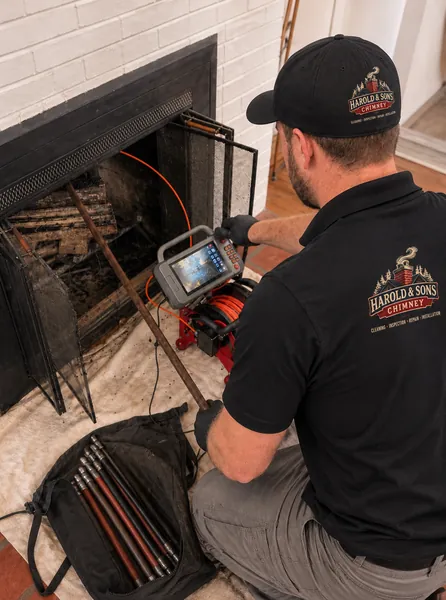
An older clay-tile liner, a metal liner installed decades ago, or an unlined passage presents different questions. A caller once described a metal liner from the 1980s that had cracked. The age alone did not determine the fix; the condition, material, appliance, and installation needed evaluation. Ask the inspector what can be seen and whether a video chimney inspection would help document the existing passage.
If the chimney has multiple flues, identify which one serves the furnace and whether any other appliances are connected to the structure. One brick chimney is not always one vent. The professional should not assume another appliance shares the same passage or that a disused opening is ready for reuse. Clarifying connections is essential before selecting a liner.
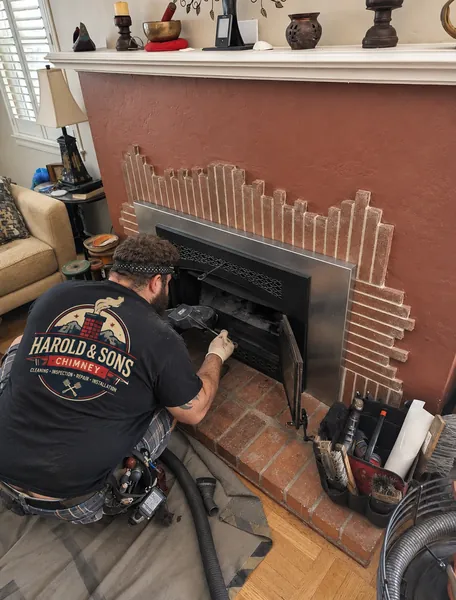
Deposits and debris may obscure the view. Cleaning the existing flue can be needed before a meaningful condition assessment. A chimney sweep may be part of the preparation, but it is not itself an installation design or a determination that the structure is fit for the new system.
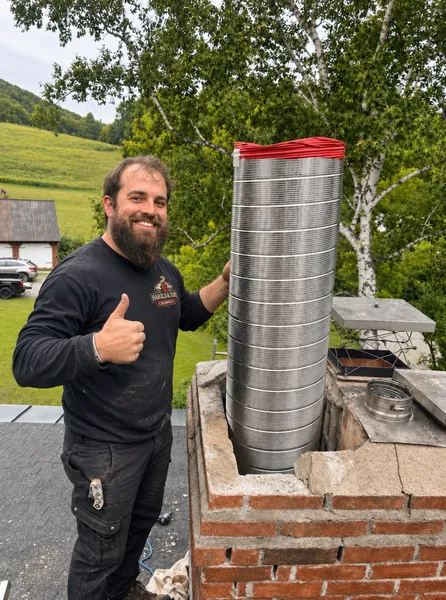
The installed system may involve liner material, diameter, insulation or other clearance provisions, connector components, support, termination, and sealing appropriate to the appliance and listing. The details depend on the chimney, appliance, product instructions, and applicable code. Do not select a liner by online price or assume the least expensive product fits every solid-fuel installation.
Ask the installer to explain why the chosen product is suitable for a wood furnace, how it will fit through the existing passage, and what happens if the chimney's internal dimensions differ from initial measurements. A clear proposal should identify the liner and associated components, work at the appliance connection, work at the top, and any separate masonry or waterproofing repairs. If an existing liner must be removed or altered, the scope should say so.
If someone recommends sharing a vent with another appliance, ask for the exact design basis and manufacturer requirements. Do not connect two appliances yourself because the openings appear close together. The interaction between equipment and venting is a professional design issue, not a matter of adding a Y-fitting.
There may be a preliminary range after a phone conversation, but a fixed final quote should reflect a site assessment. Ask which measurements have been verified and which remain assumptions. A low quote that omits access, chimney repairs, or connection parts cannot be compared directly with a complete proposal.
Separate the cost of chimney liner installation from optional appliance work. If the furnace itself needs service, say so in the scope. If crown or cap work is required, identify why. If the project requires a local building permit or another trade, ask how those responsibilities will be handled. Connecticut's environmental agency notes that wood-burning appliance installations require local building-department permitting and inspection; confirm the current requirements for your town and specific project.
Ask how completion will be checked. The installer should be able to explain the connection, the termination, any required inspections, and what documentation or product information you will receive. Keeping the manual and installation record with your house documents will help with future maintenance.
Smoke entering a room, debris falling from the flue, visible rust or cracks, repeated water entry, or an unknown previous installation all merit investigation before relying on the system. If a chimney fire is suspected, stop using the wood appliance until the vent has been assessed. If a CO alarm sounds or anyone has possible exposure symptoms, leave the building and follow emergency guidance.
Even without an obvious failure, an appliance that has not been professionally inspected for years deserves attention before a major vent change. The EPA recommends yearly professional inspection of wood-burning appliances, chimneys, and vents. A liner project is a good time to document the system's actual condition, not just its approximate height.
The liner quote should identify where the furnace connects and who will handle the connector and any adjustments to the appliance side. A liner that reaches the basement but leaves an improvised or inaccessible joint does not provide a complete plan. Ask whether the existing thimble is sound, whether other appliances are connected to the same passage, and how future inspection and cleaning access will work. If the furnace model or fuel is unknown, photograph its nameplate for the estimate. Changing the furnace later may change venting needs, so keep the documentation with the equipment records and discuss likely plans before committing to a particular liner design.
A two-story furnace flue in Bristol or Hartford may start at a basement appliance, pass through an older masonry stack, and emerge above a roof that is not simple to reach. The six-inch connector at the furnace tells the installer where one end begins; it does not establish the entire passage's dimensions or condition. Ask the estimator to trace the route, note other openings in the stack, and plan how the liner and termination will be installed and serviced. If the roof is steep, access equipment and safe work sequencing belong in the written scope. A quote that ignores the top of the chimney, the basement thimble, or a shared-flue question is missing parts of the job.
Does a six-inch furnace outlet require a six-inch liner? The outlet is important, but the correct venting specification depends on the manufacturer's instructions, appliance, chimney, and applicable requirements. Have the installer explain the selection.
Can a metal liner go inside old clay tile? It may be possible in some chimneys, but internal dimensions, liner assembly, insulation, offsets, and condition must be evaluated. A visual guess from the firebox cannot settle it.
Why might an estimate change after inspection? The professional may discover a hidden offset, inadequate opening, damaged masonry, water entry, or another connection that changes the scope. Ask for those findings in writing.
Does a new liner fix a chimney leak? Not necessarily. A liner addresses venting within its designed system; water can still enter at flashing, crown, masonry, or a chase. Diagnose and quote leak work separately.
Harold & Sons Chimney serves New Haven and the Stamford-to-Hartford area. If you are planning a wood-furnace liner, call 475-270-6677 or use the form below. Tell us the furnace model, visible connector size, chimney location, and any prior inspection findings. That gives the chimney liner assessment a better starting point than height alone.
If this sounds like your situation, these pages explain the work involved.
Keep reading
Cracked flue tiles in a tall Connecticut chimney? Document the full route and possible fire damage before comp…

Noise in a sealed Connecticut fireplace? Learn how to describe the sound, locate safe access, and check a high…

Debris in a Connecticut fireplace may be soot, mortar, tile, or nesting. Keep a sample and learn how an inspec…
Chimney season is here
Tell us what you’ve seen — a stain, a smell, smoke in the room, or just a flue that hasn’t been checked in years. We start with the problem, not a sales pitch.
475-270-6677