Repairs & Leaks
Masonry & Tuckpointing
Masonry fails in two ways: the mortar between the bricks erodes, or the bricks themselves break down. The repair is different for each.
Mortar loss versus damaged brick
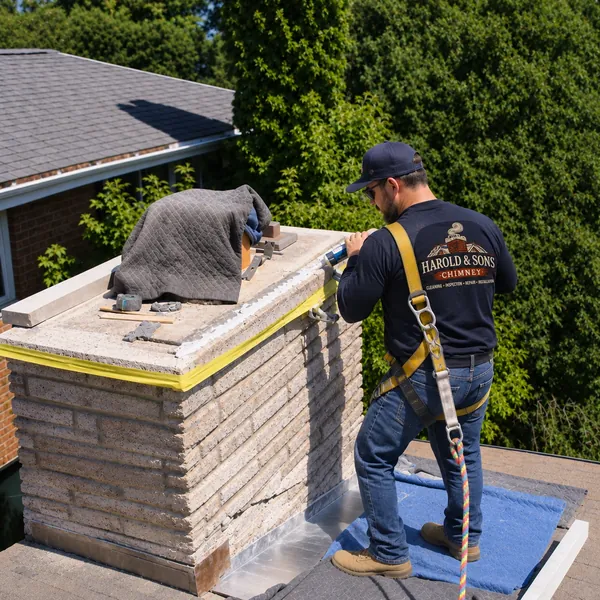
Tuckpointing removes failed mortar to a sound depth and repacks the joints with new mortar. It restores the weather seal and the structure's integrity when the bricks are still good. When brick faces are spalling, cracked, or popping off, repointing alone will not fix it; those units need replacing.
Matching matters. New mortar should suit the age and type of the existing masonry, and replacement brick should match in size and character so the repair blends rather than stands out.
Why joints fail in Connecticut
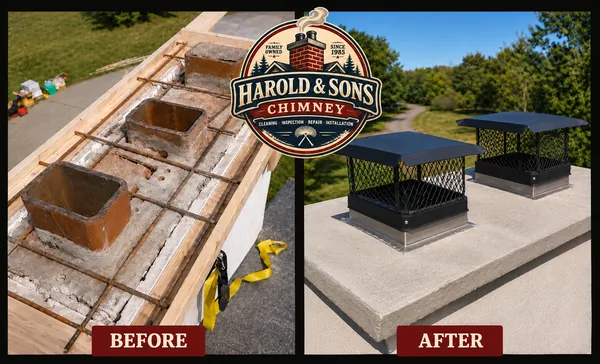
Water is usually behind it. Absorbed moisture freezes and expands over winter, breaking down mortar and brick face over repeated cycles. That is why masonry repair and water management, such as a sound crown and cap, go hand in hand.
Signs masonry needs attention
- Gaps, recesses, or crumbling mortar between bricks
- Brick faces flaking, cracking, or popping off (spalling)
- Loose bricks or a leaning section near the top
- White efflorescence or staining from moisture
Common questions
What is tuckpointing?
Removing deteriorated mortar and repacking the joints with new, matched mortar to restore the seal and structure.
Can you just repoint spalled brick?
No. Spalled or broken brick is replaced; repointing addresses the joints, not the brick faces.
Will matching new mortar be obvious?
We match type and color as closely as the existing masonry allows so the repair blends in.
Related chimney & fireplace services
Other work homeowners often ask about alongside this service.
Get started
Request a visit for masonry & tuckpointing
Tell us what you’ve noticed. Name, phone, and ZIP are all that’s required.