
Cracked Flue Tiles After a Chimney Fire: How to Evaluate the Next Step
Cracked flue tiles in a tall Connecticut chimney? Document the full route and possible fire damage before comp…
Wood systems & venting
Debris in a Connecticut fireplace may be soot, mortar, tile, or nesting. Keep a sample and learn how an inspection traces its origin in a tall flue.
Call 475-270-6677
A few flakes on the hearth after a fire can seem ordinary. A new pile of hard fragments, pieces that appear after rain, or material that drops when the fireplace has not been used raises a different question. Where did the debris originate? It could be loose soot or creosote, mortar, damaged flue tile, brick, nest material, or something else in the structure. Color and shape provide clues, but they do not prove the source.
One homeowner's concern began when pieces appeared inside the fireplace and they asked for an internal chimney check. That is a sensible request. The useful appointment is one that locates the source and assesses whether the vent is still fit for use, rather than merely sweeping everything away before anyone records what fell.
If the fireplace is cold, photograph the debris in place with a coin or other everyday object for scale. Note whether it is powdery, flaky, gritty, or hard, and whether the pieces appeared after a fire, a windy day, a leak, or a long period of disuse. If it is safe to do so, save a small sample in a bag to show the technician. Do not handle sharp or contaminated material without care, and do not reach into the flue.
Take another photo of the firebox, damper area if visible, and any staining or cracking around the opening. You do not need to decide whether a fragment is clay tile. Internet images of liner pieces can look similar to old mortar or firebrick. The inspector needs to compare the sample with the components actually installed in your chimney.
If the system also smells smoky, drafts poorly, or leaves soot in the room, report that. If pieces have begun falling regularly or look like structural material, avoid using the fireplace until it has been evaluated. A fire that appears to burn normally cannot establish that the flue liner is intact.
Soot and creosote. Deposits in wood-burning systems can loosen and fall. A chimney sweeping may remove deposits, but the inspector should still consider why a large amount is dislodging and whether the system has other damage. The appearance of deposits after a suspected chimney fire deserves particular attention.
Mortar from the smoke chamber or flue joints. A masonry fireplace has several transitions between the firebox and flue. Deteriorated joints may release gritty fragments. The cause may involve age, water, heat, or earlier work; the position of missing material has to be identified before recommending smoke chamber repair or flue work.
Clay flue tile or brick. Hard, pale or reddish pieces can lead to concern about tile or masonry damage. Cracked or missing flue tiles can be associated with chimney fires and other deterioration, according to the Chimney Safety Institute of America. Yet a fragment by itself cannot tell you where the defect is, how extensive it is, or when it developed. A closer inspection of the accessible flue surfaces is the next step.
Nests or outside debris. Uncapped openings and damaged caps can allow material into a chimney. If you hear animal movement or see twigs, identify whether the flue is occupied before any prevention work. A new cap should not seal a live animal inside. Cleaning, inspection, and animal prevention may need to happen in that order.
In a factory-built fireplace, the assembly includes listed components that differ from masonry. Damaged panels or baffles should be evaluated against the manufacturer’s instructions. Do not assume a masonry patch product is appropriate inside a prefabricated unit. A photograph of the model label can be useful when requesting prefabricated fireplace repair.
A sweep can clear loose material and improve visibility. If the technician simply removes the debris and says “all set” without identifying what fell, the homeowner may be left with the original question. Ask whether the flue was examined before and after cleaning and whether a specific source was found. Sometimes deposits obscure the liner, so a second look after sweeping is the only way to evaluate it properly.
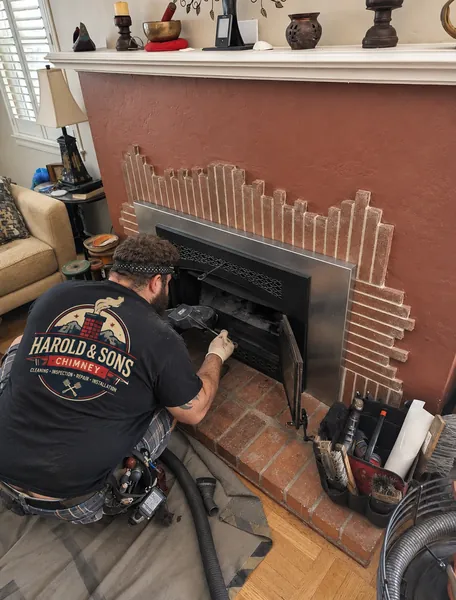
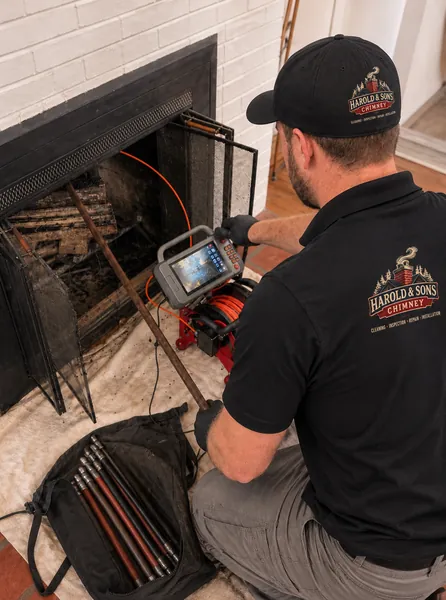
A camera may help document internal surfaces beyond the view from the fireplace. In a video chimney inspection, the technician can look for missing sections, cracks, separated joints, or obstructions within the accessible flue. A camera cannot see every concealed part of the structure, and a dark image may still require interpretation. Ask for labeled photographs or video frames and a written explanation of what was observed.
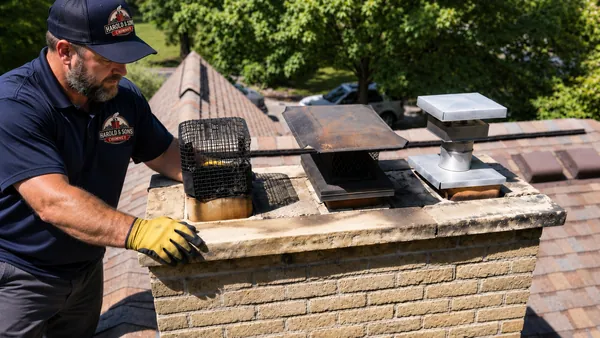
If the sample appears to come from the exterior masonry, the inspection should also address the chimney above the roof. A damaged crown or open joints can contribute to water entry and masonry deterioration. Repairing an inside symptom without checking outside moisture may leave the larger problem untouched.
The report should name the fireplace or stove being evaluated, the flue it uses, and the likely origin of the debris if it can be established. It should describe the condition and location of any defect, whether more inspection is needed, and whether the system should remain out of use. If the source remains uncertain, the report should say that plainly instead of turning a possibility into a confirmed diagnosis.
Ask what repairs are proposed and what each one addresses. A liner repair, a crown repair, smoke-chamber work, and a cap solve different problems. If a proposal includes several, ask which findings justify each. For example, new flue tile or a liner may address an internal defect, while a cap may reduce future rain and debris entry. The cap does not repair the existing tile damage.
Keep the photographs and any sample description with your home records. If you seek another opinion, the next professional can review the observed material and focus on the same area. The goal is not to obtain the shortest quote; it is to understand what is falling and whether the system can be used after the correct work.
Do not light a fire to “burn off” fragments, shake the damper to make more material fall, or insert a household vacuum hose up the flue. A vacuum designed for ordinary dust may not be suitable for ashes, and disturbing loose material can complicate the assessment. Keep the opening clear of children and pets if pieces continue to fall.
If water is dripping into the hearth, note the timing and tell the inspector. Debris following a leak can point to a different investigation than debris after a hot fire. The two symptoms may be related, but neither proves the other. A detailed history helps the technician choose whether to start with the interior, the exterior, or both.
When material falls into a cold fireplace, photograph it in place before cleanup, then keep a small sample in a labeled bag if safe. Note whether it is gritty, flaky, metallic, fibrous, or shaped like a piece of clay tile. The homeowner cannot identify the cause from that description alone, but the sample directs the first inspection. For example, a sweep may find soot and an animal nest, while a camera reveals a separate liner defect. Ask the professional to identify where the material originated and whether any more could fall. If a contractor quotes a liner solely because “something fell,” request images or a clear explanation of the finding. If there is a known past chimney fire, share that history even if the debris appeared much later.
If a repair is proposed, ask how the contractor will confirm that no more material is loose above the opening. The answer may require a closer inspection after cleaning. Keep the system unused while the source is unresolved.
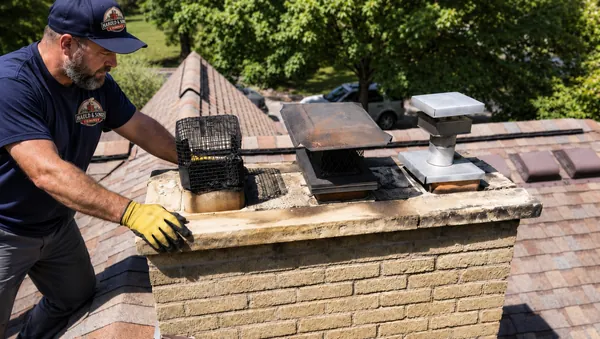
In a Shelton or Derby house with a long masonry flue, material reaching the hearth may have fallen from a tile joint far above the damper. A sample from the firebox cannot tell you its origin without seeing the route. If the stack has two flues, identify the fireplace opening and any stove or furnace connected to its neighbor. Ask the technician to show where debris appears in camera footage, what surfaces are exposed after cleaning, and whether the crown or upper masonry sheds material too. High roof access may be needed to assess the top even when the symptom appears indoors. A written location for the defect is more useful than an estimate saying “masonry pieces in fireplace.”
Is every falling flake a cracked liner? No. Deposits, mortar, tile, brick, and nesting material can all appear in a fireplace. An inspection should identify the actual material and source when possible.
Can I use the fireplace if only a little material fell? Quantity alone is not a safety test. If pieces are new, hard, recurring, or unexplained, have the system evaluated before use.
Does a camera inspection replace a sweep? They answer different questions. A sweep removes deposits, while a camera can help evaluate visible flue surfaces. Cleaning may be needed before the camera view is useful.
What if the damage is above the roof? The technician should evaluate exterior masonry, crown, cap, and accessible flue condition. Repairs may involve both the chimney top and the vent interior depending on findings.
Could it be from an animal? Possibly, particularly with twigs or nesting material, but avoid guessing from one piece. Ask whether the flue is clear and occupied before installing a cap.
Harold & Sons Chimney serves New Haven and the Stamford-to-Hartford area. If debris has begun falling into your fireplace, call 475-270-6677 or use the form below. Tell us what fell, when it appeared, and whether there are smoke or water symptoms. We can plan an appropriate chimney inspection and explain what it shows.
If this sounds like your situation, these pages explain the work involved.
Keep reading
Cracked flue tiles in a tall Connecticut chimney? Document the full route and possible fire damage before comp…

A basement wood furnace and two-story Connecticut chimney need more than an outlet measurement. Learn what a c…

Noise in a sealed Connecticut fireplace? Learn how to describe the sound, locate safe access, and check a high…
Chimney season is here
Tell us what you’ve seen — a stain, a smell, smoke in the room, or just a flue that hasn’t been checked in years. We start with the problem, not a sales pitch.
475-270-6677