
Cracked Flue Tiles After a Chimney Fire: How to Evaluate the Next Step
Cracked flue tiles in a tall Connecticut chimney? Document the full route and possible fire damage before comp…
Wood systems & venting
Two fireplaces smoking in a Connecticut house? Trace each flue and note fan use, fire stage, and roof terminations before choosing a draft repair.
Call 475-270-6677
A homeowner once described a problem that sounded urgent and confusing: two wood-burning fireplaces were sending heavy smoke back into the house. That detail changes the questions. One smoky fireplace may point toward its own flue or fire-building conditions. Trouble at two openings could involve separate defects, the way the house moves air, how the appliances interact, or a combination. Nobody can choose the cause from the number of fireplaces alone.
Smoke entering occupied rooms is a reason to stop using the affected systems and arrange an inspection. If a carbon monoxide alarm sounds, or anyone has symptoms that could be related to exposure, leave the house and follow emergency guidance. This article explains the observations worth recording and the questions a technician should answer. It is not a set of instructions for making a smoky fireplace usable without evaluation.
Did both fireplaces smoke during the same fire, or did smoke from one appear at the other opening? Did the problem begin as soon as kindling was lit, after a fire was established, or only when the fire died down? Were both dampers open as intended? Was a kitchen exhaust hood, bathroom fan, clothes dryer, or another fuel-burning appliance operating? The sequence helps distinguish one flue's behavior from how the house as a whole was moving air.
Look at the building from the homeowner's point of view, not the chimney professional's shorthand. Two fireboxes on different floors may be served by separate flues within one masonry chimney. They may also be part of more complicated renovations. Do not assume both fireplaces share a flue, and do not try to verify an unknown connection by lighting them again. The inspector needs to identify each appliance and each venting path.
Weather can matter. A condition noticed only during high wind differs from smoke that enters the room every time a fire starts. A house that has recently received new windows, insulation, or exhaust equipment may behave differently from the same house a year earlier. These are clues, not proof. The technician will need to examine the venting systems and consider how the building supplies air.
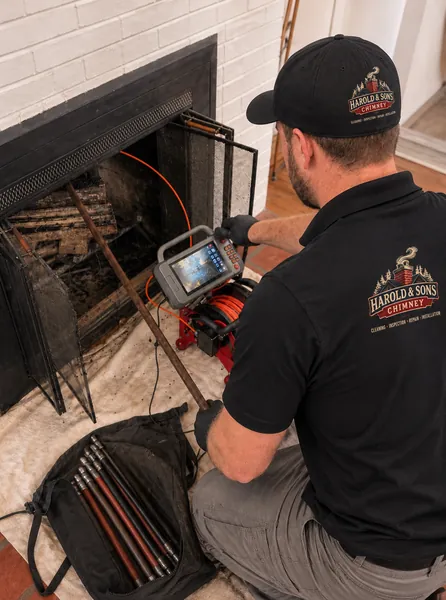
A chimney inspection should identify the flues serving the fireplaces, their accessible condition, and any obvious obstructions or deterioration. Nest material, fallen debris, heavy deposits, damaged liner surfaces, or an unsuitable connection can affect performance. A camera may be useful if the interior cannot be evaluated adequately from accessible openings. A video chimney inspection still has limits if deposits obscure the surface.
Some homeowners ask whether a sweep alone will fix smoke. Sweeping may remove a blockage or heavy deposits if those are present, but it cannot correct every draft issue. If the system is misconfigured, the house is pulling air down an unused flue, or there is damage affecting venting, the cause needs separate attention. The appointment should be booked as a smoke complaint, not merely a routine chimney sweeping, so the professional understands the reason for the call.
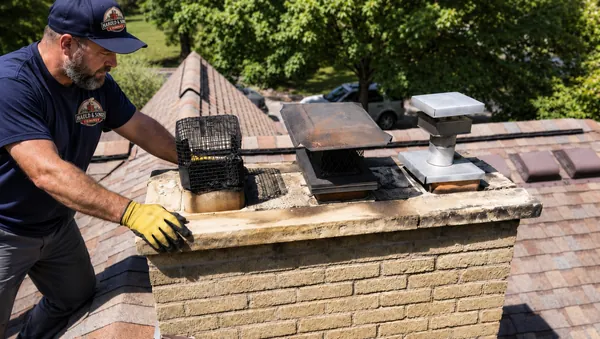
The top of the chimney deserves a look as well. Caps, openings, nearby roof geometry, and the way a flue terminates can influence how the vent behaves in certain conditions. That does not mean a taller cap or a different damper is automatically the solution. Ask for the reason behind any proposed change, including how it relates to which fireplace smoked and when.
Fireplaces rely on air moving up the flue. A house can create pressure differences that interfere with that movement. Exhaust appliances remove indoor air; the replacement air has to come from somewhere. In some circumstances, a chimney opening becomes an unintended route for incoming air. Lower-level fireplaces can be particularly confusing because the interaction depends on the layout and pressure conditions in the particular home.
Opening a window may change the symptom during a professional evaluation, but it does not prove the chimney is sound or solve the underlying reason the room was smoky. Permanent remedies must fit the appliance and the house. For example, if a powerful exhaust system contributes to the problem, replacing chimney parts without examining house pressure might leave the smoke complaint unchanged. Conversely, blaming pressure without checking the flue could overlook a damaged or blocked passage.
This is why “the chimney works at my neighbor's house” is not a helpful comparison. Two similar brick chimneys can connect to very different appliances and homes. Good smoke and draft troubleshooting considers both the vent and the building, without treating either as a convenient guess.
Wet firewood produces a smoky, cooler fire and more deposits. The EPA's wood-burning guidance recommends dry, seasoned wood and notes that a properly installed and used wood appliance should produce little smoke. If both fireplaces were fed from the same pile of damp wood, fuel could be one part of the picture. It would be a mistake, however, to conclude that wet wood is the only issue when smoke has entered a room.
The condition of the fireplace matters too. A damper that does not open correctly, a modified firebox, or an insert that was not installed with a compatible vent can affect the behavior of an individual appliance. An inspector should ask about changes since the last time the fireplaces operated properly. Homeowners sometimes remember a useful detail only when asked: the upstairs unit was rarely used, a downstairs stove was added, or the problem began after roof work.
None of these clues should prompt a homeowner to repeatedly test a smoky system. Write them down instead. If the symptom happened once and then disappeared, it is still worth reporting. A short note about what was running in the house, the weather, and the exact fireplace involved can be more informative than a blurry photograph of a room after the smoke has cleared.
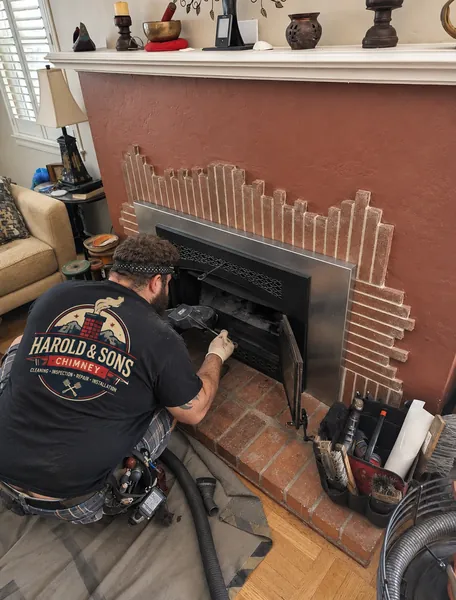
A useful visit begins with an account of the timing, then identifies each appliance and its flue. The professional examines accessible interior and exterior components, deposits or debris, dampers, and available service records. They may recommend a scan of flue surfaces, cleaning before a reliable scan, or a broader look at house pressure. The sequence should follow evidence; not every house needs every test.
Ask for findings by fireplace: what was observed at the first unit, what was observed at the second, and which questions remain. If both flues need repair, there should be a reason for each recommendation. If only one flue has visible damage, the technician should explain how that finding relates to the reported smoke at both fireplaces. Written notes help you decide whether the proposed work addresses the actual symptom.
When a system should not be used until a repair or additional evaluation, ask what condition prompted that instruction. The answer might involve a flue defect, an obstruction, or uncertainty that cannot be resolved through the available access. A responsible recommendation may be inconvenient, but it should be understandable.
When booking, clarify whether both fireplaces have independent flues inside one masonry stack or whether an old connection has been altered. A sweep can trace the accessible route and identify what still needs investigation. If smoke appears at the unused upstairs opening while a downstairs fire burns, note which damper was open and whether an exhaust fan was running. Do not block the upstairs opening with a blanket or tape: hiding the symptom does not explain the air path. Ask for a diagram or labeled photographs showing the two routes, their terminations, and any shared structure. That makes later estimates for a cap, damper, liner, or masonry work much easier to compare and prevents a repair intended for one fireplace from being applied to the other.
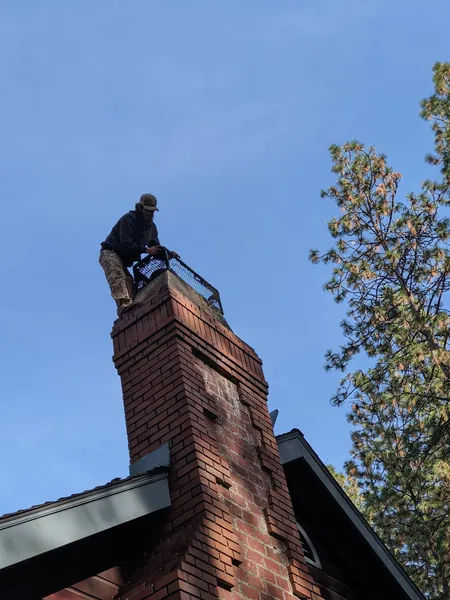
A basement fireplace and an upstairs hearth in a Hamden or New Britain house can behave differently even when their flues rise through one masonry stack. The lower opening may be more sensitive to house pressure, while the top of each flue may meet different wind patterns at the roof. That is a diagnostic possibility, not an assumption about the cause. Tell the inspector which fireplace was burning, which other opening smelled smoky, and whether a dryer or kitchen hood was running. Have the two flues traced and labeled separately. On a taller house, ask how the technician will examine both terminations and any shared masonry safely; a sweep of the active passage cannot establish the condition of the neighboring one.
If two fireplaces smoke, must they be connected to the same flue? No. One chimney structure can contain separate flues. The arrangement must be identified on site rather than inferred from the outside brickwork.
Could one fireplace be drawing smoke into the other? Interactions between openings and house pressure are possible, but the exact mechanism depends on the venting arrangement. Describe when each fireplace was operating and have both evaluated.
Would cleaning both chimneys fix it? Cleaning can address deposits and some blockages. It does not automatically correct pressure problems, unsuitable venting, damaged liners, or a damper issue. A smoke complaint calls for diagnosis.
Why did this start after new windows or an exhaust fan? Changes that affect air movement can matter, but coincidence is possible. Tell the inspector what changed and ask them to evaluate the house and vents together.
Can we use the fireplace that smoked less? Wait for the inspection. If you do not know which flue or building condition caused smoke to enter the home, using another opening may recreate the problem.
Harold & Sons Chimney serves New Haven and the Stamford-to-Hartford corridor. If smoke has entered your home from one or more fireplaces, stop using them and call 475-270-6677. Tell us which fireplace was lit, when the smoke appeared, and what else was running in the house. Those details help us plan the right inspection.
If this sounds like your situation, these pages explain the work involved.
Keep reading
Cracked flue tiles in a tall Connecticut chimney? Document the full route and possible fire damage before comp…

A basement wood furnace and two-story Connecticut chimney need more than an outlet measurement. Learn what a c…

Noise in a sealed Connecticut fireplace? Learn how to describe the sound, locate safe access, and check a high…
Chimney season is here
Tell us what you’ve seen — a stain, a smell, smoke in the room, or just a flue that hasn’t been checked in years. We start with the problem, not a sales pitch.
475-270-6677