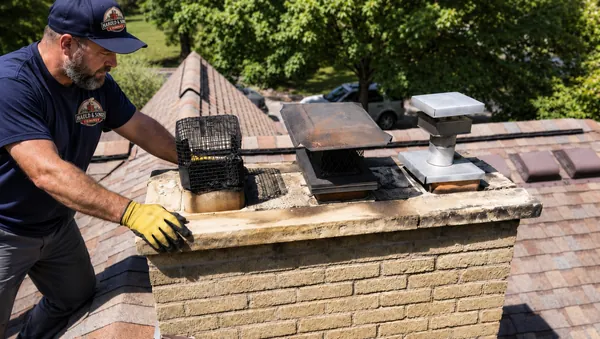

Chimney Sweeping vs. Chimney Inspection: What Is the Difference?
In a Connecticut home with one or more flues, learn what sweeping removes, what inspection checks, and how to …
Inspections & home decisions
Selling a Connecticut home after the inspector flags the chimney? Document each flue, roof-access limits, repair scope, and remaining unknowns.
Call 475-270-6677
A home inspection comment can turn a warm-looking fireplace into a negotiation in one afternoon. “Evidence of moisture,” “recommend chimney specialist,” “damper not operated,” and “fireplace not tested” may sound similar to a buyer, but they describe different levels of knowledge. The next useful step is to find out what was observed, what remains unknown, and whether the fireplace can safely be used. A repair quote before that separation may answer the wrong question.
For sellers, a clear record is more helpful than a rushed assurance that the chimney is fine. For buyers, an inspector's caution is a reason to investigate, not a definitive diagnosis of every hidden component. The goal is to document the actual system, its condition, and available repair choices while keeping the real estate timeline in view.
Home inspectors commonly evaluate visible conditions and identify items outside their scope. An image of white staining on chimney brick suggests a moisture question; it does not identify whether water entered at flashing, a crown, a cap, siding, or another roof detail. A note that a fireplace was not operated does not certify it as safe or unsafe. Ask for the complete report section and photographs, not a verbal summary passed through three people.
Gather any previous chimney inspection reports, sweep invoices, repair records, permits, and appliance manuals. Note the date, scope, and whether a reported problem was actually corrected. An invoice saying “cleaned flue” is not the same as proof that a cracked liner was repaired. If the house has two fireplaces, identify which flue and which opening the report describes.
If you cannot locate records, say so. An honest unknown is easier to resolve than an inaccurate claim that the fireplace was “always maintained.” Avoid lighting a demonstration fire after a warning merely to reassure a buyer. Keep the appliance unused until the concern is evaluated.
CSIA describes Level 2 inspection as appropriate in circumstances including a property transfer. Such an inspection can involve accessible areas beyond a routine look and video examination of the flue interior as appropriate. Ask the professional to state the level of inspection, the systems examined, access limitations, and what the images show.
A focused visit may identify a damaged liner, missing or damaged cap, water entry point, deteriorated mortar, unsafe connection, or a condition requiring further access. It may also find that a concern is less extensive than feared. The report should distinguish observations from inferences and say what further investigation would be needed before giving a firm repair scope.
Do not treat “camera inspection” as a magical guarantee of every concealed part. The camera can record the interior of the flue it reaches; it cannot prove that inaccessible framing is dry or that roof flashing is sound. Ask whether a chimney contractor, roofer, gas specialist, or other qualified trade should inspect a particular finding.
A useful repair proposal identifies the affected chimney and components, the work to be done, exclusions, and whether a permit or other inspection is expected. “Fix chimney” is too vague for comparing estimates or explaining what will be left to the next owner. If there are several possible approaches, ask why each is appropriate and what remains after each.
For example, a leak complaint may need flashing work and a crown repair, while a cracked flue tile needs a different assessment. Replacing a cap alone may not solve a leak that begins at the roof line. A gas fireplace that will not light requires model-specific diagnosis; a working gas fireplace can still have vent or service concerns. Preserve these distinctions when relaying findings.
Ask the professional to identify whether a condition prevents use pending repair. A cosmetic surface issue, a maintenance item, and an unsafe venting condition should not be presented as one urgent category. If the system should remain off, disclose that clearly in the documentation and follow the professional's recommendation.
The transaction decision belongs to the parties and their advisors, but the technical record can make it more informed. A seller might arrange the appropriate repairs before closing, negotiate a credit based on an actual scope, or provide documentation and let a buyer choose an upgrade after purchase. None of those options changes what the chimney inspection found.
If repairs are completed, retain photographs of the original condition, the written scope, invoices, permits or inspection sign-offs where relevant, and the final report. Ask what warranty applies and whether it transfers. A buyer should know exactly what was done, not merely that the seller “addressed the fireplace.”
If the fireplace is nonfunctional and will remain that way, avoid vague listing language. A decorative opening is not a functioning appliance. Buyers planning to convert wood to gas, install an insert, or remove an old unit should understand that those choices may require additional work beyond the immediate inspection finding.
Real estate deadlines make a one-line estimate attractive. It may be tempting to seal a stain, repaint a wall, or place a screen over a damaged firebox. None of those establishes the cause. Ask whether the professional can provide an initial documented evaluation and, if access is limited, a clear statement of what cannot be known before closing.
Photographs should be labeled by location. On a house with multiple chimney stacks, one image of a tile crack can be mistakenly discussed as though it were in every flue. Ask for the fireplace opening, fuel type, flue, and exterior chimney to be identified consistently across reports and estimates.
If a contractor suggests a liner or full rebuild, request the technical basis. What was observed? Which parts are unsound? Does the proposal cover the entire route and termination? Are water repairs separate? A clear answer helps both sides compare actual work instead of negotiating against fear.
A general home inspection is valuable but may be limited in how deeply it evaluates a chimney. If the report calls for a specialist, arrange one within the applicable contract timetable. You should learn whether the appliance can be used as configured, what maintenance is due, what repair options exist, and what remains unverified.
For an older masonry chimney, ask about the flue, smoke chamber, crown, cap, flashing, and any furnace or other appliance connections. For a factory-built unit, ask for the model and condition of approved components. For gas, ask whether the appliance and vent were serviced and whether the manufacturer manual is available.
If the room has a fireplace but you plan to use it only as decoration, the chimney may still require exterior maintenance. Water entering through the stack can affect the house regardless of whether anyone lights a fire. Keep structural and moisture findings on the property checklist.
If a buyer, seller, inspector, and contractor discuss a chimney by phone, details can drift. Send the full relevant report pages and label every photograph with the fireplace location and date. Ask for the specialist's written findings before negotiating a number based on a verbal summary. If a repair proposal depends on opening concealed areas, state that contingency clearly. A buyer can then see which amount covers confirmed work and which risk remains uncertain. For a gas appliance, include the model label and service history; for a masonry fireplace, include the flue and any related water history. Precise records make a transaction calmer even when the repair itself is substantial.
If the buyer plans to change the appliance after closing, still identify the present system and its defects. A planned electric insert may eliminate a combustion vent, but it will not repair a leaking chimney above the roof. A proposed gas conversion needs its own design and approvals. Make the current condition clear before estimating an upgrade.
Suppose a buyer's report on a New Haven or Farmington home notes moisture by the chimney but says the high or icy roof was not walked. That is an inspection limitation, not proof the cap, crown, and flashing are sound or defective. Ask the specialist to label which fireplace and flue are involved, what can be seen from the room and ground, and what exterior access is still needed. If the transaction timetable cannot accommodate a full roof visit, the written report should state the unknowns plainly. The same principle applies to an old masonry stack with multiple passages: do not let a general comment about “the fireplace” become a repair quote for an unidentified flue.
Does a sweep receipt prove the fireplace is ready for use? It proves the stated service was performed, not every aspect of condition. Read the scope and any noted limitations.
Should I order a camera inspection for a home sale? Ask the inspector what level of chimney inspection is appropriate for the transfer and the reported symptoms.
Can a chimney contractor determine whether a roof leak is the roofer's responsibility? They can document chimney-related conditions, but some roof assemblies need a roofer's evaluation. Coordinated scopes prevent gaps.
What if the repair cannot be completed before closing? Keep the technical findings and written scope accurate so the transaction parties can decide how to address it.
Should I run the gas fireplace to show it works? Do not operate it if an inspection or symptoms have raised a safety concern. Have it evaluated first.
Harold & Sons Chimney serves New Haven and Connecticut communities from Stamford to Hartford. If a property report flags the chimney, call 475-270-6677 or use the form below for a chimney inspection discussion. Send the relevant report excerpt and identify which fireplace it concerns.
If this sounds like your situation, these pages explain the work involved.
Keep reading
In a Connecticut home with one or more flues, learn what sweeping removes, what inspection checks, and how to …

A camera can document the inside of a tall Connecticut chimney. Learn when a flue scan helps, what it cannot s…

Bought a Connecticut home with an unknown fireplace history? Map every flue, gather service records, and learn…
Chimney season is here
Tell us what you’ve seen — a stain, a smell, smoke in the room, or just a flue that hasn’t been checked in years. We start with the problem, not a sales pitch.
475-270-6677