
What Can a Video Chimney Inspection Actually Show?
A camera can document the inside of a tall Connecticut chimney. Learn when a flue scan helps, what it cannot s…
Inspections & home decisions
In a Connecticut home with one or more flues, learn what sweeping removes, what inspection checks, and how to book the right scope for each fireplace.
Call 475-270-6677
“Can someone come clean the chimney?” sounds like a complete request. Sometimes it is. But a homeowner who has just bought a house with an unknown fireplace, or whose last fire sent smoke into the room, may need answers that cleaning alone cannot provide. Sweeping removes deposits and debris from the parts of the venting system included in the service. Inspection evaluates visible and accessible condition, configuration, and possible problems. One service can lead to the other, but they answer different questions.
Think of a homeowner with an upstairs fireplace and a wood stove downstairs, both connected to the same chimney structure. The homeowner may have removed ashes and brushed what they can reach for years. That history does not tell us whether each appliance has an appropriate, clear vent, whether the liner is sound, or whether outside water has affected the structure. Equally, an inspection report that says “creosote present” does not mean the material has already been removed.
For a Connecticut homeowner planning the first fire of the season, it helps to know what to request before the appointment. The terms below explain the work and the questions worth asking. The exact scope always depends on the appliance and the condition found on site.
With a wood-burning system, combustion leaves deposits in the flue and related components. A sweep uses appropriate tools to remove soot and creosote deposits that are accessible under the agreed scope, then collects the material without spreading it through the living space. An open masonry fireplace, a stove, and a prefabricated fireplace can require different access and handling. Cleaning only the visible brick in the firebox is not the same as cleaning the flue.
A professional should tell you which flue or appliance is being swept. This is particularly important when a chimney contains more than one flue. From the street, one brick stack can appear to serve “the fireplace,” while the house may have multiple appliances using different passages. Ask whether the sweep includes the connector, smoke chamber, or other components relevant to your setup. Avoid assuming that a quoted price covers every opening in the house.
Cleaning is also an opportunity to notice visible problems, but a sweep is not a promise that the system has passed a complete safety evaluation. A brush can remove deposits while leaving a damaged liner, unsuitable installation, or water-damaged masonry unaddressed. If the technician reports a concern, ask what they observed and what additional chimney inspection would determine.
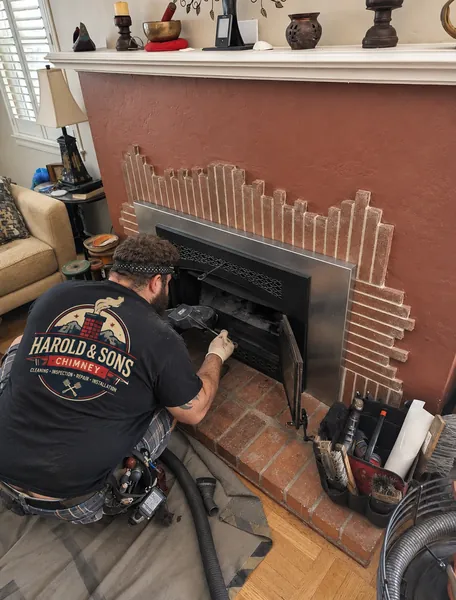
Inspection begins with the reason for the visit. A routine annual check of a known system differs from evaluating a chimney after a fire, an appliance change, or a home sale. The technician should identify the appliance and vent being evaluated, examine accessible parts according to the agreed inspection level, and explain observations and limitations. The purpose is to understand the system's condition and whether further evaluation or work is recommended.
The Chimney Safety Institute of America describes three levels of inspection. Level 1 addresses readily accessible portions during routine use when no changes or problems are suspected. Level 2 adds accessible areas and examination of the internal flue surfaces, commonly with video or another suitable means, when circumstances such as a property transfer or a change in system warrant it. Level 3 is reserved for a suspected concealed hazard that cannot otherwise be evaluated and may involve opening concealed parts. Those are differences in scope, not labels that automatically tell you a chimney is “good” or “bad.”
If you recently purchased a home, tell the company before it arrives. A house inspection may have noted a chimney from the outside without examining the interior flue in detail. An older appliance, an unknown liner, or a fireplace that has sat unused can change the questions the chimney professional needs to answer. In a home-sale chimney inspection, written findings and photographs may be especially useful to buyers and sellers making a decision.
Some visits include both a sweep and a specified inspection; others are booked for one purpose. Ask before the appointment: “What inspection level is included, which flue or appliances will you evaluate, and will I receive photographs or a written report?” Also ask whether the technician may recommend additional access or video review if they see a possible problem. A vague statement that “we take a look” does not define what was evaluated.
Conversely, an inspection does not necessarily include removing deposits. Heavy soot may limit visibility and make cleaning necessary before the flue can be assessed properly. An inspector should explain that relationship rather than treating cleaning and inspection as interchangeable line items. In some situations, the first visit establishes a plan and the cleaning or repair follows; in others, the work can be combined. The visit should make the sequence clear.
Consider a caller who wants an estimate because a fireplace will not draft. Sweeping might remove a blockage if one is found, but a poor draft can also involve appliance configuration, home pressure, outdoor conditions, and a damaged or inadequate vent. Booking “a sweep” without describing the smoke symptom may lead to the wrong expectation. Tell the company what happens when you light a fire, whether it changed recently, and if another appliance runs at the same time.
Start with the system: open wood fireplace, wood or pellet stove, gas fireplace, furnace flue, or a combination. Say how many fireplaces or stoves you have and whether they appear to use the same chimney structure. You do not need to know the technical flue arrangement; that is something to verify. Explain when the system was last professionally inspected or swept, if you know, and whether a previous owner left records.
Next give the reason for the call. Is this routine maintenance before the heating season? A home purchase? A smoky room? Debris dropping into the firebox? A chimney fire you know or suspect occurred? These details can change the inspection scope. If you have an earlier report, send it ahead of the visit and keep the appliance manual available when possible. A technician should still verify the condition on site.
Finally, ask what the appointment will produce. A completed chimney sweeping should be distinguishable from a condition assessment. If you need documentation for a real-estate decision, say so. If you only want the unit ready for use, explain whether it is currently working and whether any alarms, odors, or smoke have occurred. If there is active smoke entering living space or a carbon monoxide alarm sounds, stop using the appliance and follow emergency guidance rather than waiting for a routine appointment.
The U.S. Environmental Protection Agency's wood-burning maintenance guidance recommends professional yearly inspection of wood-burning appliances, chimneys, and vents. The U.S. Fire Administration similarly advises yearly chimney inspection and cleaning as needed. Cleaning frequency depends on use, fuel, appliance, and deposits found; “once a year” should not be used as a promise that every flue always needs sweeping on exactly that schedule.
Gas systems also deserve appropriate service and vent checks. The absence of visible wood soot does not prove that a gas appliance or its vent is safe. A nest, deteriorated vent, malfunctioning component, or unknown installation can still be relevant. Ask about the actual appliance and manufacturer requirements rather than applying a wood-fireplace cleaning schedule to every fuel type.
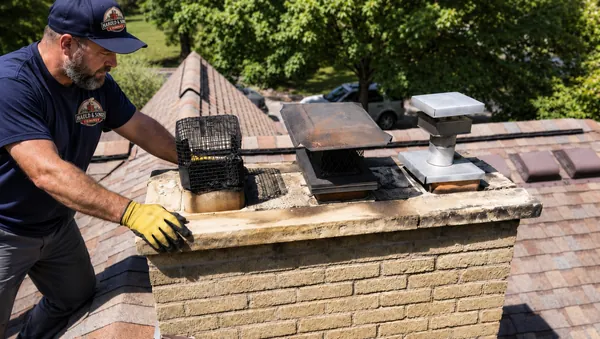
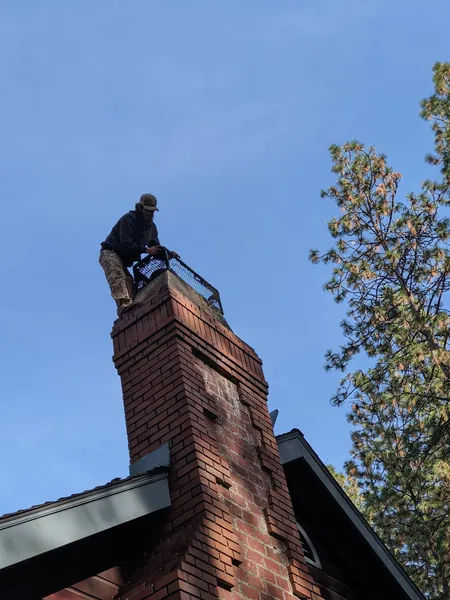
If a New Haven or West Hartford property has an upstairs fireplace, a basement stove, and an old heating-appliance connection, one sweep appointment may involve more than one flue. Describe every opening and appliance when you book, even if one has not been used in years. A technician can identify which passage was cleaned and which components were inspected; “the chimney was done” is too vague for a shared stack. A tall exterior chimney may also require separate roof access to evaluate its cap, crown, and visible masonry. Ask whether the visit includes that exterior assessment and what cannot be checked if weather or access prevents it. The answer affects what you know about the system, not merely the invoice line for cleaning.
My firebox looks clean. Do I still need a sweep? The visible firebox is only part of a wood-burning system. Deposits higher in the flue or smoke chamber may not be apparent from the room. A professional assessment can tell you what cleaning is appropriate.
We never use the fireplace. Is inspection useful? It may be, particularly before you decide to use it. Time, weather, animals, and changes by previous owners can affect a system that has been idle. Explain the history to the inspector.
Will a video scan show every problem? It can help examine internal surfaces that cannot be seen from the opening, but its usefulness depends on access, cleanliness, and what the camera can actually view. Ask the technician to explain any limitations.
Can a sweep tell me whether I need a new liner? A sweep may observe damaged material or debris. Selecting a repair or liner requires evaluating the condition and compatibility of the vent and connected appliance, not simply seeing soot.
What should I receive after the visit? Ask for a clear explanation of the services performed, important findings, any relevant photographs, and the next step. For a property transaction, confirm in advance whether a written report is part of the appointment.
Harold & Sons Chimney serves New Haven and communities from Stamford to Hartford. Tell us what appliance you have and what prompted your call. We can help you choose the right starting point: sweeping, an inspection, or a discussion of both. Call 475-270-6677 or use the request form below.
If this sounds like your situation, these pages explain the work involved.
Keep reading
A camera can document the inside of a tall Connecticut chimney. Learn when a flue scan helps, what it cannot s…

Bought a Connecticut home with an unknown fireplace history? Map every flue, gather service records, and learn…

Selling a Connecticut home after the inspector flags the chimney? Document each flue, roof-access limits, repa…
Chimney season is here
Tell us what you’ve seen — a stain, a smell, smoke in the room, or just a flue that hasn’t been checked in years. We start with the problem, not a sales pitch.
475-270-6677