
Cracked Flue Tiles After a Chimney Fire: How to Evaluate the Next Step
Cracked flue tiles in a tall Connecticut chimney? Document the full route and possible fire damage before comp…
Wood systems & venting
Planning a Connecticut wood stove? Assess hearth clearances, the full roof vent route, existing flue, local permit, and first-use maintenance.
Call 475-270-6677
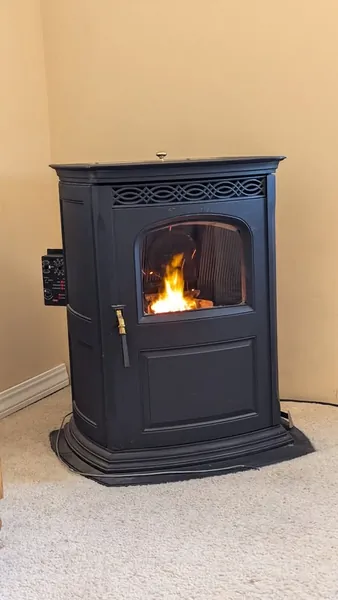
A wood stove can look like a single purchase: choose a model, put it in the room, and connect a pipe. In reality, the stove and the house become one venting system. The room needs an appropriate hearth and clearances, the chimney or new vent route has to match the exact appliance, and the town has a role in permitting and inspection. Buying a stove before settling those details can leave a beautiful appliance that cannot be installed where you imagined.
Connecticut DEEP advises that wood-burning appliance installations require permits and inspection from the local building department. That is a reason to plan early, not a reason to abandon the project. A complete wood stove installation proposal should show what will be installed, who handles each part, and how the finished system will be documented.
Will it be an occasional winter fire, supplemental heat for a regularly occupied room, or part of a larger heating plan? How will you store and carry dry firewood? Where will ashes go after they cool? The answers influence model selection and location. Ask for realistic expectations for your house rather than choosing a large advertised heat range alone.
The EPA provides information on certified wood-burning appliances and best burning practices. Efficiency and emissions claims apply to particular tested products and conditions, not to every installation or any random fuel. Review the exact model's specifications and manual. If someone says a stove will heat your whole house, ask how the layout, insulation, and air movement support that claim.
Consider daily life. A stove needs access for loading, cleaning, and future service. A high-traffic path or a location near furniture may be inconvenient even if an initial drawing looks attractive. Have the installer assess the actual room with the appliance instructions in hand.
The stove manufacturer specifies clearances to combustible walls, furniture, trim, and sometimes the ceiling. It also specifies hearth protection and dimensions. Do not assume a tile surface is automatically an adequate hearth; the supporting assembly and required protection matter. Floor framing or finish may need work.
The connector pipe has its own clearance and installation requirements. A stove placed at a safe distance from a wall can still have an improperly routed connector. Ask the installer to mark the proposed footprint, pipe path, and service space before placing an order. A few inches can decide whether a model fits.
If the room has children or pets, plan how they will be kept away from hot metal. A gate or screen must be appropriate to the layout and should not interfere with required clearances or airflow. Consider where a log rack and tools will stand without creating clutter around the appliance.
A masonry chimney may already be in the right general area, but its flue size, condition, height, connections, and route need evaluation. If a furnace or fireplace also uses it, identify every connection. The wood stove manufacturer will specify venting requirements; an old clay-tile flue does not become suitable simply because it once carried a different appliance's exhaust.
Ask for a chimney inspection and a written venting plan. Is a new liner required? How will the connector attach? Where will cleaning access be located? What happens at the top of the chimney? How will the installer address water damage or cracked masonry found during inspection? These questions belong before the stove arrives.
If no chimney exists, a listed factory-built chimney system may be part of the project. Its components, support, clearances, roof penetration, and termination must match the chosen appliance and manufacturer's instructions. A standard stove connector pipe is not a substitute for the proper chimney assembly through floors, walls, or roof.
Contact the local building department for the address where the stove will be installed. Ask what permit application, plans, inspection stages, and sign-off the town requires. Connecticut's occupational licensing rules define hearth product work scopes; ask the company who will perform the installation and whether other qualified trades will handle electrical, structural, or roof work if required.
Put responsibility in writing. Does the quote include permit fees and scheduling? Who supplies the appliance and vent components? Who makes the roof opening and finishes it? Who repairs the wall or hearth? Who demonstrates operation and gives you the manual? Ambiguous handoffs are a common source of surprise costs.
If the installer says no permit is necessary, verify with the local department rather than relying on a general rule. Requirements and scope can depend on the work. Keep the approved documents and inspection result with the house records.
Ask for a demonstration of the exact stove's controls and startup procedure. The installer should explain fuel choice, air settings, ash handling, cleaning access, and warning signs. Use seasoned wood; EPA guidance recommends wood moisture below 20 percent. Avoid burning trash, treated materials, or painted scraps.
Have working smoke and carbon monoxide alarms according to their instructions. A new installation still needs ongoing inspection and maintenance. The U.S. Fire Administration advises annual inspection and cleaning of heating equipment and chimneys by a qualified professional.
Do not take the first winter as proof that the installation is correct if smoke occasionally escapes. Report smoke spillage, unusual odor, water near the chimney, or a hot surface where one was not expected. Stop using the appliance until a concerning symptom is assessed. Keep a copy of the model number and installation manual so future service is based on the actual equipment.
One proposal may price only the stove and visible connector. Another may include a liner, roof penetration, hearth, permit, and finish work. Put both on a component list and ask what is excluded. A lower appliance price can be outweighed by a difficult vent route or required masonry repair.
Ask each contractor to identify the stove model, vent product, liner if any, clearance plan, permit responsibility, and expected site restoration. If they propose different routes, ask for the advantages and constraints of each. A picture of a completed stove in someone else's house is not evidence that your chimney has the same conditions.
Plan service access now. Can the chimney be swept and inspected without dismantling finished cabinetry? Can a future technician reach the connector and top? A tidy installation should still allow maintenance. Document concealed routes before the finish work closes them.
Before the installer leaves, ask where the chimney will be accessed for sweeping, what parts can be inspected, and how to identify unusual operation. Agree on who will provide the final permit or inspection record and product warranty details. A photograph of concealed vent routing before walls or ceilings are closed may be useful for future service. If the project includes an existing masonry chimney, retain the pre-installation assessment so later owners know what was repaired and what liner was added.
The first burning season can reveal practical questions not obvious during a demonstration. Note whether the stove responds as the manual describes, whether smoke escapes when loading, and whether the room arrangement keeps combustibles clear. Contact the installer about concerns rather than modifying the air controls or vent yourself. A well-designed system should be understandable to the people who live with it, and its maintenance should be possible without destructive work.
If a contractor proposes to use an old chimney opening, ask them to identify the exact connection point on a drawing or photograph. An unused thimble may look convenient but could be too low, damaged, or connected to another passage. The installer should confirm the complete route before selecting the connector. Ask who will close any old opening that is no longer used and how the finished wall or chimney will be restored. This avoids a neat stove installation with an overlooked abandoned connection.
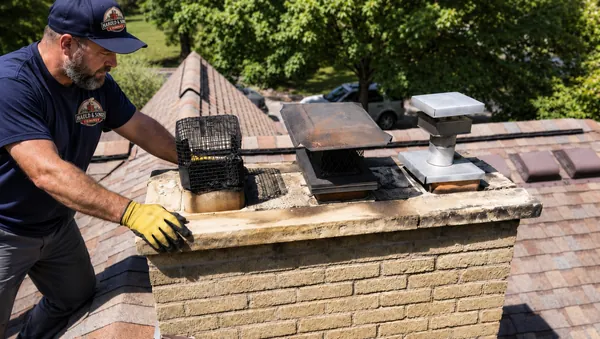
For a proposed stove in a Cheshire or Glastonbury house, the installation drawing should show the path from the appliance connector through the building to an approved chimney termination above the roof. A tall or steep roof changes access, support, weatherproofing, and future cleaning plans; it does not justify guessing a universal chimney height. The exact model and vent system, the local building department, and the site conditions determine the design. Ask who will open and restore the roof, how the vent will be supported, and how the top can be inspected after installation. If using an existing masonry stack, document the old flue's condition and any other connections before ordering the stove.
Can my old fireplace flue also serve a new wood stove? The connections and vent design require evaluation. Do not assume two appliances can share a flue.
Is a lined masonry chimney always required? The appropriate vent depends on the selected stove, existing chimney, and manufacturer instructions. Obtain a specific design.
Can I buy the stove first and call an installer later? You can, but an early site review reduces the risk that the chosen model will not fit the room or vent route.
Who requests the permit? Agree on this in the contract and verify the local building department's requirements.
Do new stoves still need sweeping? Yes. Wood-burning appliances and their chimneys need inspection and cleaning as use and condition warrant.
Harold & Sons Chimney serves New Haven and Connecticut towns between Stamford and Hartford. To discuss a wood stove installation and the chimney at your home, call 475-270-6677 or use the form below. Share your proposed stove model and a photograph of the room if available.
If this sounds like your situation, these pages explain the work involved.
Keep reading
Cracked flue tiles in a tall Connecticut chimney? Document the full route and possible fire damage before comp…

A basement wood furnace and two-story Connecticut chimney need more than an outlet measurement. Learn what a c…

Noise in a sealed Connecticut fireplace? Learn how to describe the sound, locate safe access, and check a high…
Chimney season is here
Tell us what you’ve seen — a stain, a smell, smoke in the room, or just a flue that hasn’t been checked in years. We start with the problem, not a sales pitch.
475-270-6677