
Cracked Flue Tiles After a Chimney Fire: How to Evaluate the Next Step
Cracked flue tiles in a tall Connecticut chimney? Document the full route and possible fire damage before comp…
Wood systems & venting
Fireplace smokes on windy Connecticut days? Examine the roofline, chimney termination, damper, and competing exhaust before choosing a cap.
Call 475-270-6677
The fireplace drafts fine on a still Saturday, then sends smoke into the room when a storm arrives. A homeowner may blame the chimney cap, the wind direction, or a newly installed kitchen hood. Each could be relevant, but wind alone does not identify the failure. The way air moves through the house, the flue, and around the chimney top all affect a fire's draft.
Do not keep operating a smoky fireplace while experimenting. Smoke in the living room is a reason to extinguish the fire safely, ventilate as appropriate, and arrange an evaluation. If a carbon monoxide alarm sounds or people feel unwell, leave the house and contact emergency responders. A professional can test the system under the conditions that matter and explain whether the cause is a component, an operating issue, or more than one factor.
Does smoke enter when the fire is first lit, only after it has burned down, or when you open the doors? Does it happen only when wind comes from one side of the house? Does the kitchen exhaust fan, dryer, or bathroom fan run at the same time? Has the problem existed for years, or did it start after a renovation, roof change, or new cap?
Make a simple log without relighting an unsafe fireplace: date, weather, which fans were running, approximate stage of the fire, and where smoke escaped. Record whether the damper was fully open and whether an upstairs fireplace was also in use. Details like “only when opening the screen to add wood” help distinguish a brief operating spill from continuing reversal of flow.
If the chimney has never been inspected since you bought the house, begin there. A known obstruction, cracked liner, animal nest, or disconnected appliance can be overlooked when everyone focuses on the windy day. Weather may expose a weakness that was already present.
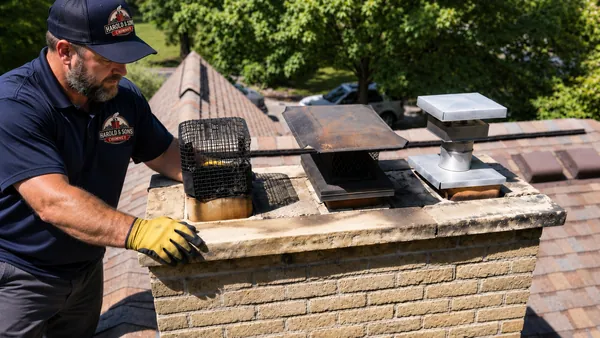
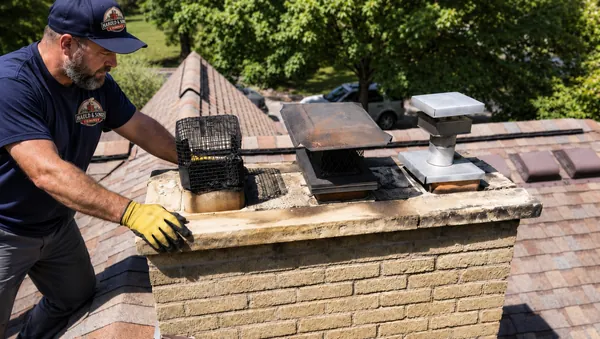
The chimney termination sits in moving air above the roof, nearby trees, and sometimes a taller section of house. Wind patterns around that geometry may produce unfavorable pressure at the outlet or turbulence that changes with direction. The location, height, nearby obstacles, and termination design matter. A cap that is appropriate for one chimney is not automatically appropriate for another.
Ask a professional to inspect the existing chimney cap, flue opening, and roof surroundings. Is the cap blocked with debris? Is it a model approved for the chimney? Was it installed just before the problem began? Do not buy a “windproof” accessory based on a review before the actual vent has been evaluated.
Chimney height changes can have structural, code, and performance implications. A diagnosis should explain why a height or termination modification is proposed and how it will comply with the relevant system requirements. An improvised extension may create a new problem.
Exhaust appliances move air out of a house. A strong kitchen hood, bath fan, dryer, or other venting system can lower pressure in the room relative to outside air. On some days, the easiest replacement-air path may be down an unused or weakly drafting chimney. Wind can make the pressure difference more noticeable.
Tighter windows, air sealing, and remodeling can change this balance. A homeowner may remember that the fireplace worked before new windows or a large range hood were installed. That history is useful, but it is not proof the hood alone caused the problem. The flue could also be partially obstructed or undersized for the opening.
A professional may evaluate house pressure and appliance operation under representative conditions. The solution could involve correcting a vent defect, changing a competing exhaust condition, or addressing approved combustion air arrangements for the appliance. Do not prop a window open as a permanent, guaranteed cure or bypass a manufacturer's requirements.
An open fireplace depends on the relationship among its firebox, smoke chamber, damper, and flue. A damper that sticks partly closed, a damaged smoke chamber, or a narrowed flue can reduce the margin that lets the system cope with changing outdoor conditions. Wind may simply be the day those limits become obvious.
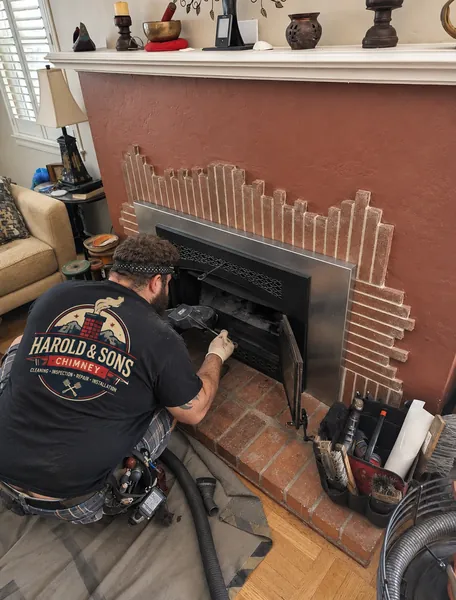
The professional should inspect the fireplace damper and the accessible vent path. If a sweep removes a nest or buildup and smoke improves, ask whether the underlying surfaces and termination were also inspected. If a past chimney fire damaged tiles, cleaning does not repair those tiles.
If the same chimney has multiple flues, identify exactly which appliance connects to each one. Smoke from one opening may be drawn down a neighboring unused flue under certain conditions. An inspection of only the active fireplace can miss a second path. Record which dampers and appliances were in use when the symptom occurred.
A fire that burns cleanly on a calm day does not prove the chimney is sound. A safety issue can be intermittent. Similarly, smoke on a windy day does not prove that the house needs a taller chimney. Repairs should follow observed defects, measurements, and the actual appliance instructions.
Do not use a large hot fire as a “draft test.” It may temporarily overcome a pressure problem while putting more heat through an unknown chimney. If you have a gas appliance venting through or near the same structure, do not assume wood-fire advice applies to it. Gas venting needs model-specific diagnosis.
An appropriate chimney inspection may include the flue interior, top, damper, and smoke chamber. Explain the wind pattern to the technician so the visit is not limited to a sweep. Ask what could not be assessed on a calm day and whether further testing is recommended.
What was the chimney's physical condition? Was the termination unobstructed and appropriate for this system? Did the technician observe negative pressure or evidence of competing exhaust? Which observations suggest the proposed fix? Are there multiple contributing conditions? What should the homeowner change in operation, if anything?
If the answer involves a new cap, ask why that design is suitable. If it involves modifying the fireplace opening or flue, ask for the measured basis and scope. If the conclusion is “use it only when calm,” ask whether that is a safe operating recommendation for a system that has already spilled smoke; do not accept a workaround without a safety assessment.
Keep the report and note conditions after any repair. A symptom that appears only with a particular wind direction may take time to reproduce. A careful record makes the follow-up more productive than guessing from memory several months later.
An appliance or building change is a valuable clue. If smoke began after a cap replacement, give the inspector the old and new cap descriptions. If it began after an air-sealing project, mention new windows and exhaust fans. If nearby trees grew or a second story was added, show older photographs if available. The professional can compare the timing with the chimney's physical condition. Correlation alone does not prove the new work caused the problem, but it narrows what should be tested.
Ask the report to separate a confirmed defect from an airflow hypothesis. It might say the damper is obstructed and that pressure effects remain possible. Correcting the physical defect first, then observing operation under the relevant wind condition, is more informative than changing three components at once. Keep a record of the repair and the weather when you next assess performance. If smoke returns, the second visit can start with evidence rather than another generic cap suggestion.
If the problem affects only a basement fireplace, tell the inspector about any upstairs fireplace in the same stack. The two flues can experience different pressure conditions. Include the basement door position and which exhaust equipment was running when smoke entered. These observations can help identify a route that a single calm-day inspection might overlook.
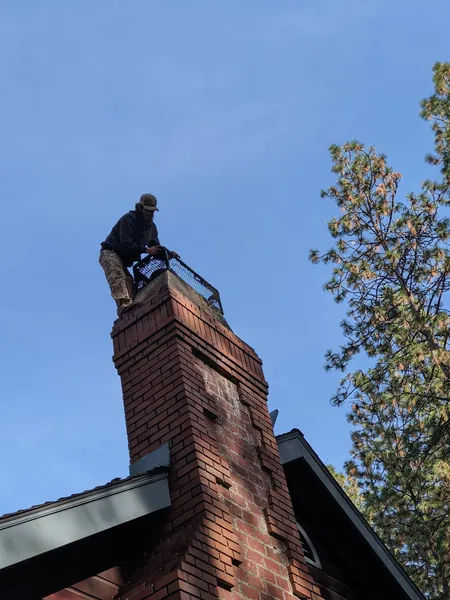
If smoke appears during wind in a Stamford or Bridgeport home, note which side of the house receives the wind and whether the chimney is lower than a nearby roof section or addition. This is a site-specific question, not a claim that coastal wind always causes downdraft. A Hartford house can have the same symptom with different roof geometry or competing exhaust inside. Photograph the stack and nearby roof from the ground, and record which fans ran when smoke entered the room. A high, steep roof can limit a quick look at the termination; ask how the inspector will examine it safely and whether an observed cap problem or an airflow hypothesis supports the recommendation.
Could a blocked cap cause smoke only during storms? Yes, an obstruction may contribute, but the pattern needs inspection rather than assumption.
Will opening a window fix negative pressure? It may temporarily change airflow in some cases, but it does not establish the cause or make an unsafe fireplace acceptable for use.
Can a kitchen hood affect the fireplace? Competing exhaust can affect house pressure. The whole vent and room conditions should be evaluated.
Is a smoke smell without visible smoke harmless? No. Note when it occurs and have the appliance and vent checked, especially if symptoms or alarms are involved.
Do I need a special wind cap? Only after a professional identifies the system and explains why a particular approved termination is appropriate.
Harold & Sons Chimney serves New Haven and Connecticut communities from Stamford to Hartford. For a smoking fireplace evaluation, call 475-270-6677 or use the form below. Describe which wind conditions, fans, and fire stages bring on the problem.
If this sounds like your situation, these pages explain the work involved.
Keep reading
Cracked flue tiles in a tall Connecticut chimney? Document the full route and possible fire damage before comp…

A basement wood furnace and two-story Connecticut chimney need more than an outlet measurement. Learn what a c…

Noise in a sealed Connecticut fireplace? Learn how to describe the sound, locate safe access, and check a high…
Chimney season is here
Tell us what you’ve seen — a stain, a smell, smoke in the room, or just a flue that hasn’t been checked in years. We start with the problem, not a sales pitch.
475-270-6677