
Cracked Flue Tiles After a Chimney Fire: How to Evaluate the Next Step
Cracked flue tiles in a tall Connecticut chimney? Document the full route and possible fire damage before comp…
Wood systems & venting
An upstairs fireplace and basement stove in one Connecticut chimney need separate flue mapping. Learn what a sweep and inspection should cover.
Call 475-270-6677
An upstairs wood-burning fireplace and a cast-iron wood stove downstairs may both seem to belong to the same chimney. A homeowner who cleans ashes and brushes accessible areas might reasonably ask for one “chimney cleaning” quote. The exterior brick stack, however, tells us very little about how each appliance is vented. There may be separate flues inside one structure, different connector paths, or earlier alterations that require a closer look.
The first task is identification: which appliance uses which passage, and what condition is each in? Do not assume that the appliances share a single flue, or that both were inspected because one person looked at the chimney top. A good service visit names each appliance and each vent separately before making a recommendation.
Tell the company the type of fireplace upstairs and the make and model of the stove downstairs if known. Explain how often each is used and whether they are ever used at the same time. If one was installed by a previous owner, note the lack of records rather than guessing its age. A stove manual, old permit, or previous sweep invoice can help identify the intended vent configuration.
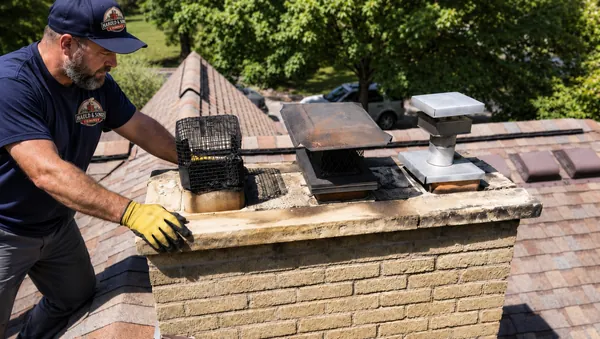
From the yard you may see one stack with two openings or caps, but the internal layout still needs verification. Some flue terminations are difficult to distinguish from the ground. Do not climb onto the roof or remove a connector to investigate. A technician can examine accessible openings, connections, and flue paths using appropriate tools.
If a past visit covered only the upstairs fireplace, a receipt saying “chimney cleaned” does not necessarily mean the stove's vent was cleaned. Ask what flue was serviced and which parts were included. The same question applies when arranging a chimney inspection.
Each wood-burning appliance can leave deposits in its own venting path. Use frequency, wood quality, operating style, and vent configuration can affect what accumulates. The U.S. Environmental Protection Agency recommends professional yearly inspection of wood-burning appliances, chimneys, and vents. Cleaning is based on deposits and condition rather than a blanket promise that both flues need exactly the same work.
An open fireplace has a smoke chamber and damper arrangement that differs from many stoves. A stove has a connector pipe and appliance components that may need attention under the agreed service scope. Cleaning the fireplace's firebox will not clear the stove connector, and brushing the stove flue does not inspect a fireplace's smoke chamber. Ask the sweep to explain what work is planned for each system.
The householder's own ash removal is useful ordinary upkeep, but it is not a substitute for evaluating an inaccessible flue or vent. A homeowner can keep the hearth tidy for years while liner joints deteriorate or an animal nest develops in a little-used passage. Prior self-cleaning is a reason to describe the history honestly, not a reason to feel embarrassed about requesting professional help.
The professional should identify the connection from each appliance to its flue, examine accessible interior and exterior components, and record the condition and limitations for each. A camera examination may be helpful when a passage cannot be evaluated adequately from an opening. If one flue is obscured by deposits, cleaning may be needed before its liner can be assessed.
The stove's installation deserves its own review: appliance type, connector arrangement, vent suitability, and accessible clearances. The EPA cautions that installation errors may be hidden and emphasizes the relationship between appliance and vent size, height, and configuration. The fact that a stove has worked for years does not establish that the installation is appropriate.
For the fireplace, ask about the damper, smoke chamber, flue, and any signs of water or fire damage. If one appliance smokes when the other is used, describe that exact sequence. House pressure and vent interactions may be relevant, but a technician needs to identify the actual paths before drawing conclusions.
The estimate should list the upstairs fireplace and downstairs stove separately, with the flue serving each and the inspection or sweeping proposed. If it includes cleaning, ask whether the connector and smoke chamber are covered where relevant. If it includes a camera scan, ask which flue will be scanned. One price can cover multiple tasks, but the tasks still need names.
If repair is recommended, ask which appliance is affected. A cracked tile in the fireplace flue is not automatically a defect in the stove vent, and a damaged stove connector does not prove the fireplace needs a new liner. Documenting findings separately makes it easier to choose what to repair and what to maintain.
If someone proposes changing an appliance connection or adding a new liner, ask how the manufacturer instructions and local requirements were considered. Connecticut DEEP notes that wood-burning appliance installation involves local building-department permits and inspections. A remodel involving both systems needs an explicit plan rather than a shared assumption about “the chimney.”
That would be a significant design question for the qualified professional, not an invitation to make a homeowner connection. The appropriateness of any shared or separate venting arrangement depends on the appliances, their listings, applicable requirements, and actual construction. Do not add a fitting or operate both appliances together because smoke seems to exit the roof. Ask for a documented evaluation and a compliant plan.
Likewise, a sealed or unused fireplace opening does not automatically free its flue for another appliance. Hidden connections, past damage, and altered components may remain. A camera and physical inspection can help identify what is there, within the limits of access.
If smoke enters either room or a carbon monoxide alarm sounds, stop using the affected appliances and follow emergency guidance. The CPSC stresses that CO can be produced by wood as well as gas and recommends professional attention to vent blockages and connections.
An unused fireplace can still have a damper, flue, and termination that need assessment. Water or animals may enter that passage while the wood stove operates through a neighboring flue. Ask whether each path has its own cap and how the two openings are identified at the chimney top. If the stove is used daily and the fireplace only once a year, the cleaning schedule may differ, but do not automatically exclude the fireplace from an inspection. Document which path was swept, which was inspected, and whether either was inaccessible.
If a former furnace connection has been abandoned, ask whether it was properly closed and how the remaining flue is configured. Old thimbles can be mistaken for active connections. A simple sketch of the stove connector, fireplace damper, and top openings helps everyone understand the stack.
Suppose smoke from the wood stove appears at the fireplace opening, or the fireplace smells smoky when the stove burns. Stop using the affected system and report the exact conditions. A damaged separation between flues, a pressure pattern, or another vent issue could be involved. Do not seal the fireplace opening with plastic to conceal the smell. Ask the inspector to trace both routes and state what can and cannot be determined without additional access. If a repair involves one flue, ask how the work will protect or affect the other. That detail is easy to miss when an estimate lists only the exterior chimney address.
Keep separate service records for the stove and fireplace even if one company handles both. Note which flue was swept, what deposits were found, and whether the cap or crown serving the common structure was repaired. Clear records prevent a later owner from assuming both openings were serviced when only one was.
On a Hartford or Cheshire property, an upstairs fireplace and a lower-level stove can appear to use the same chimney while occupying two different flues inside it. A tall stack may also contain an abandoned connection. Ask the technician to draw the paths from each appliance to its own opening at the roof and to identify which flue was swept or filmed. If roof access is difficult, the report should distinguish what was seen from below from what remains unverified at the top. The cap and crown can protect a shared masonry structure, while each vent path still needs an appliance-specific assessment. This is why one invoice labeled “chimney cleaning” should specify which routes it actually covered.
Does one brick chimney always mean one flue? No. A chimney structure can contain more than one separate passage. The internal arrangement must be identified on site.
Can a sweep clean both on one visit? Often a visit can be planned to address both, but confirm that the quote includes each appliance and vent and what cleaning is appropriate after assessment.
We never use the upstairs fireplace. Does it still need inspection? An unused passage can develop damage or collect nesting material. Before using it again, have it evaluated.
Can we reuse the fireplace flue for a new stove? That depends on condition, size, appliance requirements, and the proposed installation. A contractor must assess it before designing the new connection.
Should both be off until the inspection? If there is a smoke, alarm, blockage, or damage concern, stop using the affected systems and seek professional guidance. The exact scope of restriction depends on what is found.
Harold & Sons Chimney works from New Haven across the Stamford-to-Hartford area. If your home has a fireplace and a stove connected to the same chimney structure, call 475-270-6677 or use the form below. Tell us about both appliances so the visit can identify and address each vent rather than treating the stack as one unknown opening.
If this sounds like your situation, these pages explain the work involved.
Keep reading
Cracked flue tiles in a tall Connecticut chimney? Document the full route and possible fire damage before comp…

A basement wood furnace and two-story Connecticut chimney need more than an outlet measurement. Learn what a c…

Noise in a sealed Connecticut fireplace? Learn how to describe the sound, locate safe access, and check a high…
Chimney season is here
Tell us what you’ve seen — a stain, a smell, smoke in the room, or just a flue that hasn’t been checked in years. We start with the problem, not a sales pitch.
475-270-6677