
Why Is My Chimney Leaking After Rain?
Rain beside a Connecticut fireplace may enter at flashing, crown, cap, or chase. Track the storm pattern and l…
Leaks & masonry
A cracked crown on a Connecticut masonry chimney can admit water below the top. Learn what a high-roof inspection and repair estimate should show.
Call 475-270-6677
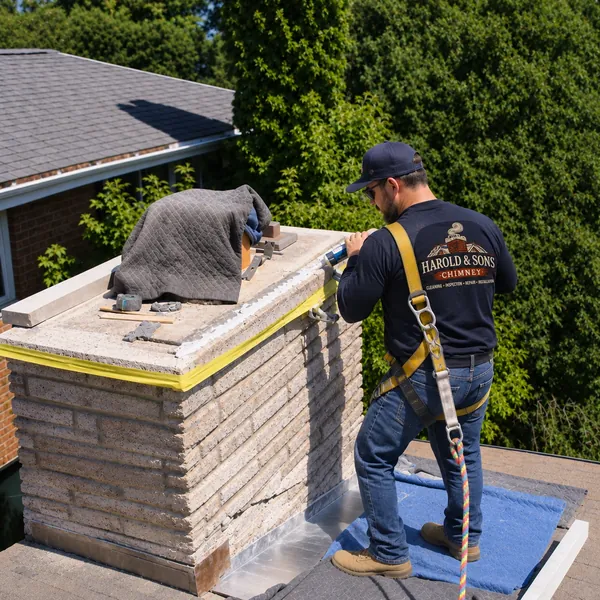
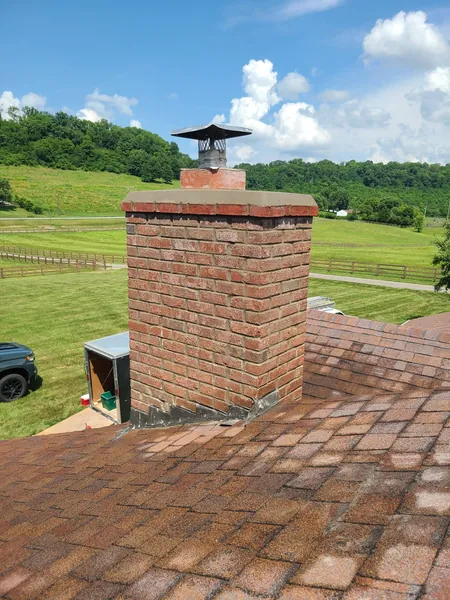
From the ground, the top of a brick chimney may look like one flat slab. Up close, there are separate pieces doing separate jobs. The crown is the protective top surface around the flues. The cap covers a flue opening or the whole top, depending on design. The flashing sits where the chimney meets the roof. If water is coming into the house, these components must not be lumped together under the vague phrase “chimney top.”
A crack in the crown deserves evaluation, but its appearance alone does not tell a homeowner whether a small repair, a new crown, or additional masonry work is appropriate. The condition of the surface, its slope and edges, the flue openings, and the surrounding brick all matter. A useful inspection also asks where the water goes after it reaches the top.
The crown helps shed water away from the vertical masonry and the spaces around the flues. It is exposed to rain, sun, and temperature changes. When its surface deteriorates or separates from adjacent components, water may reach areas that were meant to remain protected. The Chimney Safety Institute of America identifies damaged crowns as one common route for water-related chimney damage.
That does not mean every interior stain started at the crown. Rain can enter through flashing, masonry joints, a missing cap, or nearby roof materials. If the problem is a ceiling stain far from the fireplace, the crown is a possibility to inspect, not an automatic answer. A technician should connect a crown recommendation to visible defects and the pattern of moisture reported inside.
Look from the ground only if the chimney is safely visible. You may notice missing pieces, a rough top, or vegetation, but a hairline crack can be difficult to see. Do not climb a roof with binoculars or use a ladder just to verify a contractor's claim; ask for clear close photographs and an explanation.
A small surface crack and a badly deteriorated crown are different conditions. The inspector should assess whether the material around the crack remains sound, whether water can enter at flue penetrations, and whether the crown still has a shape that sheds water. If the top is mostly a thin mortar wash with open edges, sealing a single line may not address the broader design or deterioration.
Cracking can also be a symptom of movement or moisture affecting the masonry below. If upper brick courses are loose, a new surface treatment over them will not stabilize the structure. Ask whether the surrounding brick and mortar were examined and whether masonry repair is a separate part of the scope.
Photographs should show the entire crown, not just one close-up of a crack. A wider image reveals how the top relates to the flues, caps, and brickwork. If a contractor says the crown must be replaced, ask what is unsound and whether a more limited repair would leave an effective water-shedding surface.
The method depends on the existing material and its condition. A professional may recommend a suitable repair to localized cracks on an otherwise sound crown, or removal and construction of a new crown when the old one cannot be repaired adequately. Details such as shape, projection beyond the masonry, and separation at the flue are relevant to a properly designed top. The product or method should match the structure, not simply cover the visible defect for a season.
Ask how the repair will meet the existing flue or cap assembly. A crown can be sound on most of its surface and still have an open joint at a penetration. Conversely, a properly fitted cap will not fix cracks across the crown. Each recommendation should state which water path it addresses.
If the crown has broken apart, the proposal may include upper-course masonry work. A chimney rebuild is a much larger scope than a crown repair and should be justified separately. Ask where sound masonry begins and what will be removed. Be wary of an estimate that uses “rebuild” without dimensions or a clear description.
Some treatments are intended to protect sound masonry from water; they cannot make loose brick or an open joint structurally sound. The CSIA warns against non-breathable coatings that can trap moisture in masonry. If a contractor recommends chimney waterproofing, ask what defects will be repaired first and whether the product is appropriate for the chimney material.
An earlier homeowner might have “sealed the chimney” and still experienced a leak. That does not prove the crown repair failed; water may have entered elsewhere, or the crown may not have been the area treated. Keep the old invoice and photographs. The next technician can compare exactly what was done with the current evidence instead of repeating a treatment by default.
If the inside of the fireplace is damp, the inspection may also need to look at the flue and connected appliance. Water can affect dampers, liners, or metal components. A roof-only repair does not answer every question about a system that has repeatedly gotten wet.
Look for a description of the existing condition, the repair or replacement method, which flues or components are affected, and whether caps or upper brickwork are included. Ask whether the contractor will address water entry at other observed locations or recommend another professional for roof flashing. A clear scope is more useful than a one-line “crown repair” with no explanation.
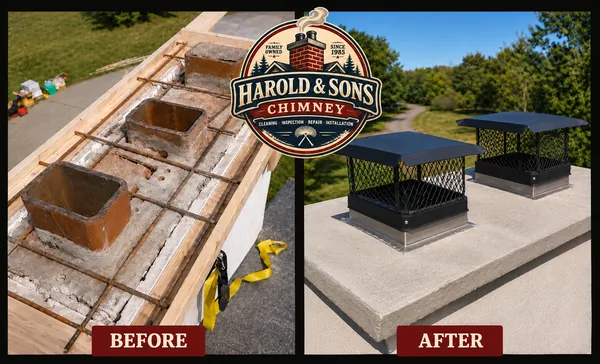
Photos before and after are valuable because most homeowners cannot view the work safely from the roof. The finished surface should be documented in context, with caps and openings visible. Keep those images with the service record; if a future leak occurs, they establish what was repaired and when.
The technician should also explain whether the fireplace may be used before the work is complete if water has reached a vent or appliance. The answer depends on findings and should not be assumed from the appearance of the crown alone.
A clear photo from a safe position can show obvious missing material, large cracks, weeds, or separation around a flue tile. It usually cannot show the underside of an overhang, the quality of a previous repair, or whether water has already entered the masonry. Ask the professional to photograph the crown from several sides and identify each flue opening. A hairline line on a photograph may be a surface crack; a broad broken section with loose material is a different scope. If the inspector recommends a coating, ask whether the substrate is sound enough for it. If a rebuild is recommended, ask how new work will meet the flue tiles and shed water beyond the brick faces.
Water may enter at a crown, but a damaged cap or roof flashing can be present at the same time. Ask the contractor which component is confirmed defective, what work will be done first, and how the repair will be checked after the next rain. If brick or mortar below the crown has deteriorated, replacing the top alone may leave a vulnerable chimney. Conversely, repointing the sides while leaving an open crown can allow more water to enter. A written sequence helps you avoid paying twice for scaffolding or roof access. It also helps a roofer and chimney mason coordinate where flashing meets masonry. Keep photographs and invoices so a future leak inspection can see precisely what changed.
If the crown repair requires removing an existing cap, confirm that its reinstallation or replacement is included. A sound crown with an unprotected flue opening can still admit rain and animals. The final photographs should show both parts.
Connecticut winter weather can bring snow, ice, rain, and thaw to the same roof during a season. On a masonry chimney in Hamden or Avon, a crown that admits water deserves an inspection of the brick courses below it, not just a photograph of the top. If the stack rises above a steep roof, ask how the contractor will access the full perimeter and document separation around every flue tile. A coating proposal should state the substrate's condition; a rebuild proposal should state how the new crown sheds water beyond the masonry. Photographs after the next storm can help distinguish an old interior stain from ongoing entry, especially if flashing was repaired at a different time.
Is the crown the same thing as the chimney cap? No. The crown is the top surface around the flues on a masonry chimney. A cap helps cover an opening or top assembly. They protect different pathways.
Can every crack be sealed? No. The material's condition, crack location, and overall crown design matter. A failing surface may need replacement rather than another patch.
Could the flashing cause the same interior stain? Yes. Water can travel before it appears indoors. The roof junction should be assessed along with the chimney top when the symptom is a leak.
Will a new crown stop falling brick? Only if the masonry beneath is sound and the crown was the contributing issue. Loose bricks and mortar need their own assessment and appropriate repair.
Why did the leak return after a previous seal? The earlier work may have treated only one entry point or a surface symptom. Show the prior scope to the new inspector so the diagnosis can be revisited.
Harold & Sons Chimney works from New Haven across the Stamford-to-Hartford region. If a technician has mentioned a crown crack or water is appearing near your fireplace, call 475-270-6677 or use the form below. A scoped chimney crown inspection and repair can establish what the top needs and what other water routes should be checked.
If this sounds like your situation, these pages explain the work involved.
Keep reading
Rain beside a Connecticut fireplace may enter at flashing, crown, cap, or chase. Track the storm pattern and l…

Rust streaks on a Connecticut chimney chase? Learn how a metal cover protects a framed fireplace enclosure and…

A ceiling stain near a Connecticut chimney may start at flashing or another roof detail. Track rain and thaw p…
Chimney season is here
Tell us what you’ve seen — a stain, a smell, smoke in the room, or just a flue that hasn’t been checked in years. We start with the problem, not a sales pitch.
475-270-6677