
Why Is My Chimney Leaking After Rain?
Rain beside a Connecticut fireplace may enter at flashing, crown, cap, or chase. Track the storm pattern and l…
Leaks & masonry
A ceiling stain near a Connecticut chimney may start at flashing or another roof detail. Track rain and thaw patterns before agreeing to a repair.
Call 475-270-6677
Water appears on the ceiling near a chimney, so the chimney gets blamed. Sometimes that is exactly where the problem is. Sometimes water enters higher up on the roof and travels along framing before it reaches the wall by the fireplace. The flashing at the roof-to-chimney junction is one area to inspect, not an answer that can be confirmed from a stain's indoor location.
Flashing is a system of metal and roofing details designed to direct water away from the place where two different materials meet. It may include pieces integrated with shingles and pieces secured to the masonry. A patch of caulk on an exposed seam does not tell you whether the whole assembly is properly arranged. For a recurring leak, the right conversation is about the path water takes across and around the roof.
Write down which storms produce the stain. A steady vertical rain may wet the chimney masonry; wind-driven rain from one direction may reach a vulnerable roof junction. Melting snow or ice can create different patterns from a brief summer shower. These observations are helpful but not conclusive. An inspector will still need to examine the roof, flashing, chimney, and accessible interior.
Photograph the stain when it appears and mark its approximate size on a dated note rather than cutting open the ceiling yourself. If the attic is safely accessible, look for a moisture trail without stepping off the proper walking surface or disturbing electrical equipment. A roof leak may show up at a ceiling corner after traveling several feet. Report where you first see water, not only where you assume it entered.
Tell the professional about roof age if known, recent shingle replacement, solar work, masonry repairs, a new crown, or a previous “flashing seal.” A newly installed roof can still have a chimney-junction problem, and an older roof may have issues unrelated to the chimney. The goal is to identify the failure point rather than assign blame by trade.
Water must be shed over the roof surface instead of behind the roof covering or down the chimney face. Where the roof slopes toward the chimney, the upper side may need special attention because water collects or changes direction there. The exact arrangement depends on roof geometry and construction. A technician should explain the visible parts and how the proposed repair restores a continuous water-shedding path.
The Chimney Safety Institute of America identifies bent or separated flashing as a possible water-entry issue. It also names caps, crowns, and masonry protection as distinct areas. That distinction matters if a proposal says “replace flashing” while photos show a missing cap or open joints above. Several defects can coexist; the estimate should separate them and explain which one is associated with the leak pattern.
Ask whether the work includes both the metal at the masonry and the roofing material surrounding it. A flashing replacement may require shingles to be lifted or replaced. If the chimney company's scope covers only masonry-side work and a roofer will handle the roof side, make that coordination explicit. A gap between two trades' quotes can leave the homeowner with a leak and no one responsible for the whole junction.
Sealant may be appropriate at some details, but it should not serve as the entire water-management strategy where metal pieces have separated or were installed incorrectly. A bead of material can crack, pull away as surfaces move, or direct water into a hidden gap. An earlier seal that held for a season and then leaked again is a reason to review the assembly, not simply add more material.
Bring the prior invoice and photographs. Ask the new inspector exactly where the earlier material was applied and whether the same location remains open. The returning leak may come through another route entirely. If the earlier repair was a temporary measure, that context helps set expectations for a durable proposal.
Do not run your own hose test on a steep roof or wet electrical fixtures to recreate the stain. Professionals sometimes use controlled testing under suitable conditions, but it must account for how water travels and avoid creating damage. Good records of natural storm conditions are often a safer and more useful homeowner contribution.
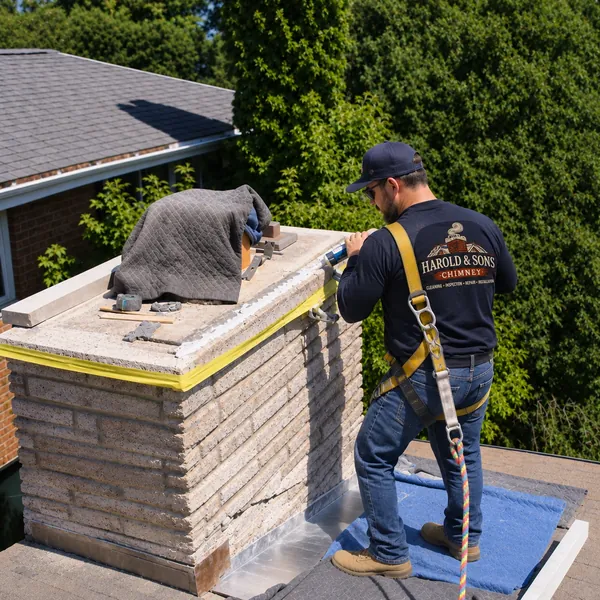
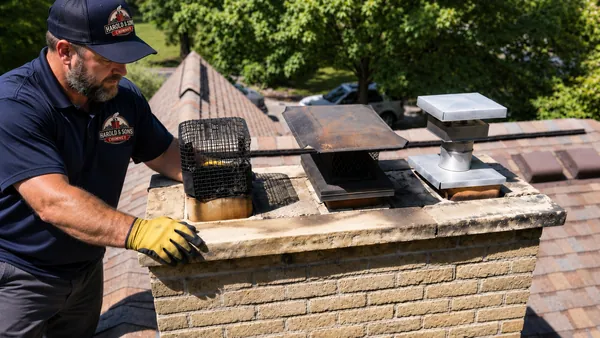
A chimney crown protects the top of a masonry chimney around its flues. A chimney cap covers the opening or a top assembly. Flashing protects the roof junction. If water appears in the firebox, the top components may be especially relevant, though no single symptom proves the source. If a ceiling stain follows the chimney's roof line, flashing rises on the list but still needs verification.
Water can also enter through damaged brick or mortar and move downward inside the structure. A chimney with loose joints may need masonry repair in addition to flashing work. Waterproofing sound masonry may have a role after defects are corrected, but it cannot replace missing mortar or properly fitted roof metal. Ask for a component-by-component explanation.
Factory-built chases add another set of details: the chase cover, siding, trim, and roof penetration. A shingled roof can leak at its junction with the chase even when the metal cover above looks sound. Tell the company whether your fireplace is a masonry firebox or a prefabricated unit; it changes what they need to inspect.
A good scope identifies which side of the chimney and which part of the junction is being worked on, whether existing flashing will be removed, what adjacent roof materials are included, and whether the masonry needs preparation. Ask for photographs of the exposed defect and the completed water-shedding detail. “Seal around chimney” does not tell you what will be done.
If two companies disagree, ask each to explain the evidence. One may be focusing on roof shingles and another on the crown. They could be seeing different problems, or one could have missed an area. Request the limits of each inspection in writing rather than choosing based only on the lower quote.
If water has reached the fireplace, a gas unit, or an electrical component, mention it. The roof repair may stop new water, but the affected appliance may still need its own condition evaluation before use. The building envelope and the venting system are related, yet separate scopes of work.
A roofer may propose to replace step flashing and nearby shingles; a chimney mason may propose to cut and reset counterflashing in the brick. Both descriptions can be relevant to the same joint. Ask each contractor to mark on photographs which metal and masonry details they will handle. If a bid says “seal chimney,” request a drawing or specific description of the layers and how water will be directed onto the roof covering. Does the work include removing old patch material? How will the flashing interface with any planned repointing? A coordinated plan matters most when one trade has to finish before the other.
If the chimney is against a roof slope, rainwater can collect and move around its uphill side. Ask whether the roof geometry requires a diverter or other detail; that decision belongs to the actual roof design. A stain below the chimney may take time to dry after a repair, so photograph and monitor it rather than immediately painting over it. If new moisture appears, the location and storm conditions become evidence for a focused follow-up.
Before work begins, ask whether access equipment and adjacent shingles are part of the price. An estimate that addresses only exposed metal may grow when the roofer opens the junction. Photographs of the layers as they are uncovered can show whether the initial diagnosis was correct.
On a roof in Stamford or Cheshire, note whether the leak appears after rain from one direction, during a long storm, or as winter snow melts above the chimney. The geometry on the uphill side can affect where runoff collects; a high, steep roof also affects how a roofer and chimney mason inspect the joint. Ask both trades to mark the metal and masonry layers they will address and to photograph what becomes visible when old flashing is lifted. A cap or crown can be defective at the same time, but the stain cannot identify which joint failed. The written scope should explain the actual water path and who is responsible for restoring adjacent shingles, mortar, or counterflashing.
Can flashing fail while the roof looks fine? Yes, a junction detail can have a problem even if the surrounding field shingles look intact. The assembly and water path should be examined closely.
Will a roofer or a chimney company fix it? It depends on the defect and the skills required. Some jobs involve both trades. Ask who handles the roofing, masonry, and final water-management detail.
Why does water show up far from the chimney? It can travel along framing or materials before becoming visible. The indoor stain locates the symptom, not necessarily the entry point.
Does new flashing mean I need a new cap too? Only if the cap has its own defect or the inspection supports that work. The two components protect different areas.
Should the chimney be inspected after a leak? If water has reached the vent, firebox, or other chimney components, ask whether their condition needs evaluating before use.
Harold & Sons Chimney works from New Haven across the Stamford-to-Hartford region. If rain is appearing near your chimney, call 475-270-6677 or use the form below with photographs and the timing of the leak. A scoped flashing and chimney leak assessment can identify what needs attention and whether roof work should be coordinated.
If this sounds like your situation, these pages explain the work involved.
Keep reading
Rain beside a Connecticut fireplace may enter at flashing, crown, cap, or chase. Track the storm pattern and l…

A cracked crown on a Connecticut masonry chimney can admit water below the top. Learn what a high-roof inspect…

Rust streaks on a Connecticut chimney chase? Learn how a metal cover protects a framed fireplace enclosure and…
Chimney season is here
Tell us what you’ve seen — a stain, a smell, smoke in the room, or just a flue that hasn’t been checked in years. We start with the problem, not a sales pitch.
475-270-6677