
Why Is My Chimney Leaking After Rain?
Rain beside a Connecticut fireplace may enter at flashing, crown, cap, or chase. Track the storm pattern and l…
Leaks & masonry
On a Connecticut roof, a cap, masonry crown, and framed-chase cover do different jobs. Identify the chimney and flues before choosing a repair.
Call 475-270-6677
“The metal thing on top of my chimney is rusted” can describe several different parts. A cap covers a flue opening; a masonry crown sheds water from the top of a brick or stone chimney; a chase cover spans the top of a framed enclosure around a factory-built chimney. They solve different problems. Ordering the wrong piece may leave a leak untouched or put an unsuitable termination on a vent.
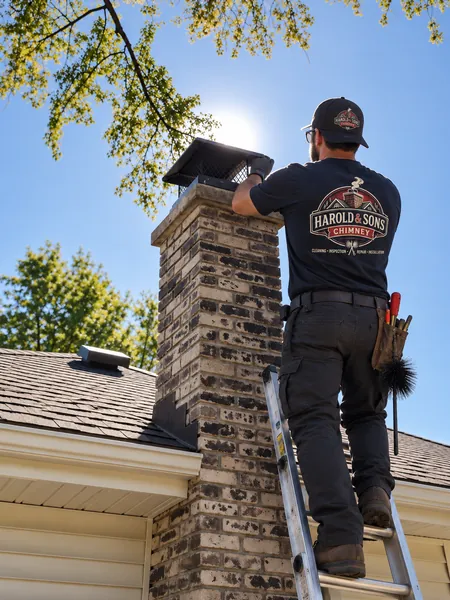
The chimney top is an exposed part of the house, but the homeowner usually sees it only from the ground. You do not need to climb the roof to have a useful conversation. Identify whether the chimney is masonry or a framed chase, note which appliances connect to it, and take a clear ground photo if possible. A professional can inspect the actual construction and explain what needs replacement or repair.
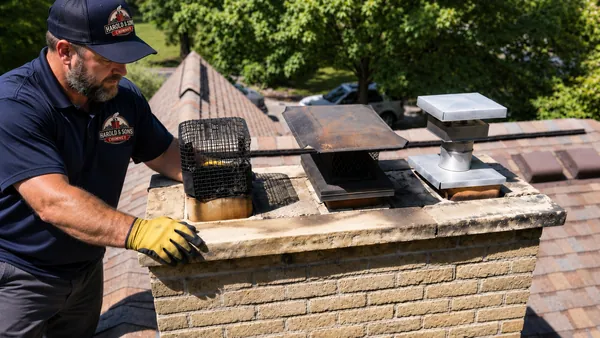
A properly selected cap can help keep rain, debris, and animals out of a flue while allowing exhaust to leave as designed. On a masonry chimney with two or more flues, there may be individual caps or a common cap covering the top. The cap needs to suit the flue arrangement and operating appliances. A screen that is damaged, blocked, or inappropriate can interfere with venting.
Ask for an explanation of the proposed chimney cap installation: what openings it protects, how it attaches, what material it uses, and how the system will be inspected and cleaned afterward. If one flue serves a gas appliance and another serves a wood fireplace, their terminations and manufacturer requirements may differ. A decorative one-size-fits-all cover is not automatically suitable.
A cap is not a cure for every leak. It protects the opening but cannot seal failed roof flashing, rebuild crumbling brick, or replace a cracked crown. If water stains appear beside the fireplace, the professional should inspect the surrounding chimney and roof junction rather than guessing that rain simply fell down the open flue.
The crown is the surface at the top of masonry around the flue openings. Its job includes directing water away from the chimney structure. Cracks, poor slope, separation around flue tiles, or deterioration can let moisture enter masonry. That moisture may then show up far below the top, sometimes after freeze and thaw cycles have made the damage more visible.
A crown repair should address the extent of the defect and the condition of the surrounding brick and mortar. A superficial coating may be appropriate for a limited condition, but it is not a universal substitute for rebuilding an unsound crown. Ask the contractor what they observed, what material they propose, and how the repair interfaces with flue liners and the chimney cap.
If brick faces are flaking or mortar is loose, the crown may be only one part of the water problem. Chimney masonry repair and roof flashing should be considered as separate components. A photo of a new crown can be reassuring, but the rest of the chimney still deserves attention.
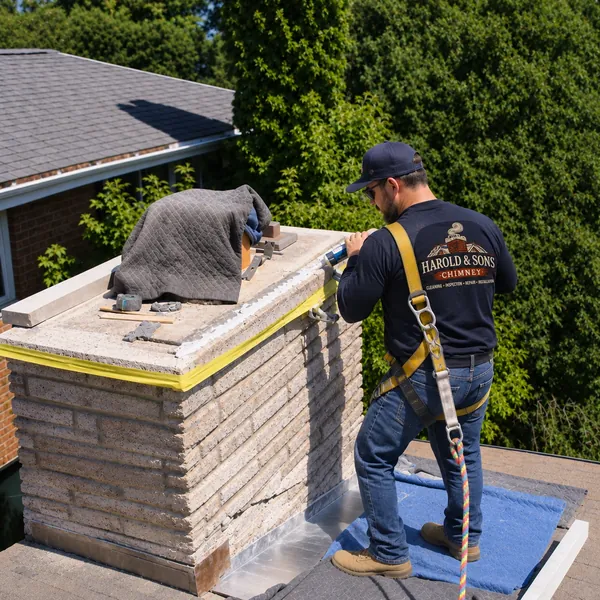
A factory-built chimney is sometimes enclosed by a framed chase finished with siding, stucco, or brick veneer. A metal chase cover spans the enclosure top around the chimney pipe. A rusted, flat, poorly fitted, or failing cover can send water into the chase. The actual chimney termination and listed components also need to remain appropriate to the system.
Replacing a chase cover is not just cutting a flat sheet of metal to approximate the opening. The cover needs proper fit, drainage, attachment, and compatible penetrations for the installed chimney. If water has run down the interior, the professional should look for damage to vent components and surrounding materials where accessible.
Do not mistake a masonry chimney with a decorative metal cap for a factory-built chase. Likewise, brick veneer around a framed chase does not necessarily turn it into a masonry fireplace. The structure underneath determines the repair. A model label or prior installation documents can help identify factory-built components.
An older Connecticut house may have a fireplace flue, a second fireplace, and a flue formerly used by a heating appliance. Before selecting a common cap, identify each flue's present use and condition. An abandoned opening should not be covered in a way that hides an unresolved connection or drainage issue. An active vent must terminate as its appliance and applicable requirements specify.
Photograph the top and ask the technician to label which opening serves which appliance. Does the proposed cap allow future inspection and sweeping? How does it handle the different flue heights and shapes? Is an existing liner or appliance termination part of the cap assembly? A written answer prevents confusion after installation.
Animal entry is another clue. Noise in a sealed fireplace may reflect a missing cap, damaged screen, or access elsewhere in the chase. Address the animal safely before sealing an opening. A new cover that traps an animal is not a repair.
Staining on the ceiling beside a chimney could come from crown or chase defects, flashing, masonry, siding, or another nearby roof detail. Water can travel along wood framing and emerge away from the entry point. Note whether the stain appears during heavy rain, wind-driven rain, or snowmelt and whether it is inside the firebox or on the exterior wall.
A proper chimney leak repair evaluation should document the suspected path and the components examined. If the top looks sound but the roof flashing is not, replacing a cap may add expense without fixing the leak. If several defects exist, ask which are confirmed and which are preventative.
Water damage can continue even when the fireplace is never used. Moisture in a chase may affect framing and vent components. On masonry, repeated wetting can deteriorate mortar and brick. Do not wait for a ceiling to drip before asking about a heavily rusted top or visibly broken crown.
Ask each contractor to name the chimney type, appliances and flues, observed defects, exact component being replaced, and material or model of the proposed part. The quote should say whether removal and disposal, surrounding masonry repair, flashing work, and follow-up inspection are included. If a custom cap is proposed, ask for dimensions and attachment method.
Avoid choosing purely by a catalog photo. A cap that looks elegant from the yard may be hard to remove for cleaning or incompatible with a particular vent. A metal cover that looks neat may lack the drainage detail the chase needs. The repair should solve a documented problem while preserving proper venting and access.
Keep before-and-after photographs with the invoice. If water appears later, these images and the weather pattern will help distinguish a recurrence from a second entry point. Ask the installer what maintenance or visual checks the new component needs.
An unused fireplace or retired heating flue can still admit rain or animals. Before a contractor covers it, ask how the former appliance was disconnected and what condition the flue and masonry are in. A common cap may protect several openings, but it should not hide an unknown connection or prevent future inspection. If the flue may be reused, keep its dimensions and condition report with the house records. If it is to remain out of service, label that status clearly. This is especially useful in older homes where a chimney contains several passages and only one is regularly used.
If the roof is being replaced soon, tell both contractors before ordering custom metal. Flashing and chase work may need to be sequenced with the new roof. A cap or crown repair can still be urgent, but coordinated access and photographs make it easier to see which trade completed each water-shedding detail.
An older masonry stack with several flues in New Haven and a framed factory-built chase on a newer Hartford-area house may both look like tall roof projections from the street. The first may have a crown and individual or common flue caps; the second may have a metal chase cover and a listed vent termination. Ask the contractor to photograph and label the actual components, especially when the roof is high or steep and a ground view hides the details. If two flues serve different appliances, identify both before selecting a common cap. A quote should explain the water-shedding part, the venting part, and the safe access needed to install and inspect each.
Can a cap replace a crown? No. They serve different parts of a masonry chimney, though both may be addressed in one project.
Does a factory-built fireplace need a masonry crown? Usually its framed chase uses a cover rather than a masonry crown. Confirm the actual system before ordering anything.
Will one cap fit two flues? A properly designed common cap may cover multiple masonry flues, but the specific appliances and terminations must be considered.
Is stainless steel always the right material? Material choice depends on the component, design, exposure, and system requirements. Ask for the reason behind the specification.
Can I use the fireplace with a missing cap? A missing cap can allow water, animals, or debris into the flue. Have the system inspected before use if its condition is unknown.
Harold & Sons Chimney serves New Haven and Connecticut communities from Stamford toward Hartford. To identify what is on your chimney and discuss chimney cap installation or top repairs, call 475-270-6677 or use the form below. A ground-level roof photo and the number of fireplaces help.
If this sounds like your situation, these pages explain the work involved.
Keep reading
Rain beside a Connecticut fireplace may enter at flashing, crown, cap, or chase. Track the storm pattern and l…

A cracked crown on a Connecticut masonry chimney can admit water below the top. Learn what a high-roof inspect…

Rust streaks on a Connecticut chimney chase? Learn how a metal cover protects a framed fireplace enclosure and…
Chimney season is here
Tell us what you’ve seen — a stain, a smell, smoke in the room, or just a flue that hasn’t been checked in years. We start with the problem, not a sales pitch.
475-270-6677