
Why Is My Chimney Leaking After Rain?
Rain beside a Connecticut fireplace may enter at flashing, crown, cap, or chase. Track the storm pattern and l…
Leaks & masonry
A brick fell from a Connecticut chimney? Protect the area below, document the stack, and learn when tuckpointing is enough or more masonry work is needed.
Call 475-270-6677
Finding a brick on the ground beside the house raises an immediate question: where did it come from, and could more material fall? If you can see that it came from the chimney, keep people away from the area below and arrange a professional inspection. Do not climb up to press it back into place. A brick that detached may be the only loose unit, or it may be the first visible piece of a larger moisture or mortar problem.
A single exterior brick falling can be the first visible sign of a wider problem. The useful next step is to locate the missing unit and evaluate the surrounding chimney, not to assume that a bag of mortar and one replacement brick settle the cause. The outside surface, crown, cap, flashing, and any interior symptoms belong in the same conversation.
A brick missing near the chimney top exposes different details from one missing near the roofline or farther down a wall. At the top, a damaged crown or cap may be letting water reach upper courses. Near the roof, flashing and the way water moves across shingles may be relevant. Lower down, long-term moisture, inappropriate previous repairs, or movement may need attention. These are possibilities for evaluation, not diagnoses from a photograph.
Take a photo from the ground that shows the whole chimney and the suspected gap. Keep the fallen brick if it can be collected without entering an unsafe area; its condition may provide a clue. Was it intact with mortar attached, fractured, or flaking apart? Does nearby brick look powdery, chipped, or pushed outward? Do not stand beneath a loose section to get a closer image.
Tell the inspector about any water stains in the attic or near the fireplace, white staining on masonry, previous repointing, or a chimney that was “waterproofed” in the past. The story of how the chimney has changed can be as important as the single missing brick. A chimney can look acceptable from the driveway while its upper joints are open when viewed safely at roof level.
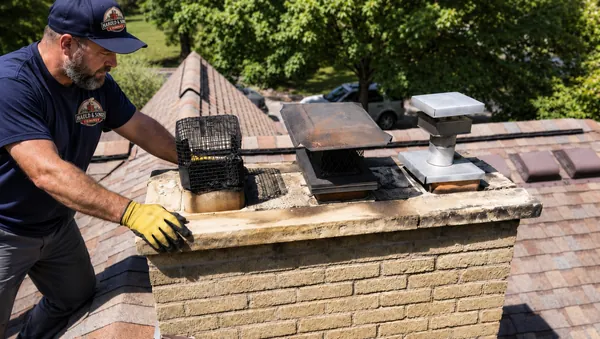
Tuckpointing and masonry repair address deteriorated mortar joints and damaged masonry where the remaining structure is suitable for localized work. A technician may remove unsound mortar and replace it with appropriate material as part of a repair. The choice of mortar and method needs to suit the existing brick and construction; a hard, incompatible patch is not necessarily a durable solution on older masonry.
Replacing a brick deals with one missing or damaged unit. It does not restore a chimney whose surrounding courses are loose or whose water-entry problem remains. If several adjacent bricks have deteriorated, the scope may need to extend beyond the obvious hole. Ask the contractor to identify the boundaries of sound material and explain why the proposed extent of repair is enough.
A chimney rebuild is a broader project when localized patching cannot leave the upper chimney stable or weather-resistant. Rebuild can mean only the portion above the roof or a more extensive section; the estimate should name the limits. A fallen brick does not automatically require rebuilding the entire chimney, but a large unstable area should not be described as a simple tuckpointing job either.
The Chimney Safety Institute of America notes that water entry can damage brickwork and mortar and identifies caps, crowns, flashing, and suitable masonry water protection as separate preventive components. An inspector should examine each relevant part before offering a water-related recommendation. If a crown is cracked, repairing mortar joints without addressing water from above may not last as expected.
A cap protects the flue opening from rain, but it is not an umbrella for all of the masonry below. Flashing manages the roof-to-chimney junction; the crown protects the chimney top around the flues. These parts serve different functions. Ask which one, if any, is contributing to the brick failure and what evidence supports that conclusion.
Some masonry has a white, powdery deposit called efflorescence, which can appear when water carries salts to the surface. It is a useful clue to discuss, not a substitute for testing where the moisture comes from. Cleaning the stain can improve appearance while the underlying water path persists. If a proposed treatment is “waterproofing,” ask whether joints, crowns, and other defects will be repaired first and whether the product allows masonry to release moisture appropriately.
The visit should document the fallen-brick location, the condition of neighboring units and joints, the crown and cap, and visible flashing or water routes. The inspector should look for evidence inside accessible attic or fireplace areas where relevant and ask whether the chimney serves an appliance that is currently in use. Photos from more than one angle make the recommendation easier to understand.
If the chimney is in use, the professional may recommend evaluating its flue and connection as well. A damaged exterior does not necessarily mean the liner is damaged, and an intact-looking liner does not make falling exterior masonry harmless. Those are separate findings. An appropriate chimney inspection can set out what was checked and what remains inaccessible.
Ask whether the structure needs temporary protection or use restrictions while the work is planned. The answer depends on where and how much masonry is loose and what the chimney vents. If there is immediate danger of falling material, keep people away and contact a qualified local professional promptly.
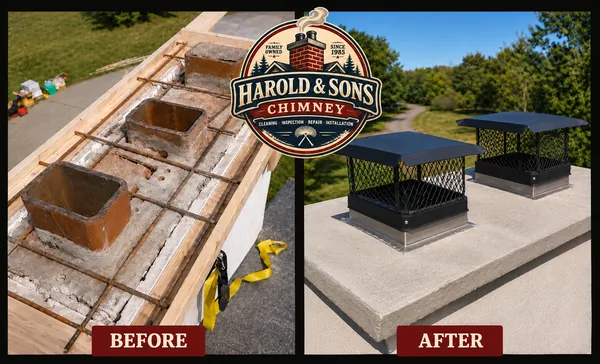
An estimate should say which courses or sides of the chimney will be repaired, whether individual bricks will be replaced, how mortar joints will be treated, and whether the crown, flashing, or cap is included. “Fix loose brick” is too brief to know whether the contractor is addressing only a visible gap or the surrounding cause. Ask for before-and-after photos of areas not easily visible from the ground.
If a rebuild is proposed, request an explanation of why the existing material cannot support a localized repair. If only tuckpointing is proposed, ask how the contractor determined the neighboring brick is sound. Neither answer needs to be theatrical; it needs to match the observable condition and a clear work scope.
The repair may involve rooftop access and coordination with roofing work. Do not compare two bids only by the dollar amount if one includes a new crown and the other does not. Ask which work is necessary now, what could be monitored, and whether any recommended maintenance is separate from the fallen-brick problem.
Until the structure is assessed, keep people away from the ground immediately below any visibly loose brick, especially a walkway or driveway. Photograph the fallen piece and the stack from the ground; do not try to fit it back yourself or remove more brick to see what is underneath. Tell the inspector whether the piece fell during wind, after a freeze, during roof work, or while the fireplace was operating. Ask whether adjacent bricks remain secure and whether water entry at the crown or flashing contributed to the failure. A replacement brick that matches the color may improve appearance, but the repair plan should address the bonding and support of the surrounding masonry. If the chimney is shared by multiple appliances, identify which flues and connections need evaluation before use.
If you have a piece from the fallen brick, bring it to the inspection rather than disposing of it. Its shape and weathered surfaces may help locate it on the stack. Matching a new brick is useful, but stability of the surrounding courses comes first.
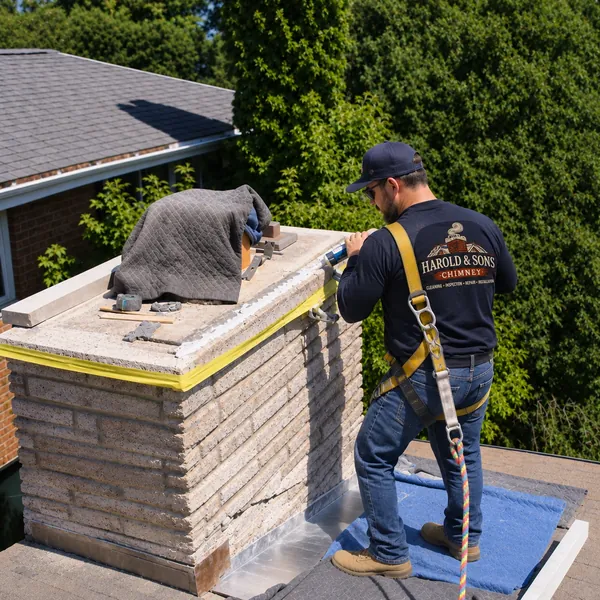
On a taller New Haven or Bridgeport house, a loose brick can land far from the fireplace. Keep people away from the area below the stack, including a driveway, side path, or shared entry, while a professional assesses it. A ground photograph should show which face lost material, the roof junction, and whether other brick appears displaced. Ask whether the top courses, crown, and adjacent mortar are sound and whether water exposure contributed. The access plan for a steep or high roof is part of a real masonry estimate: how will the crew reach the damaged courses, protect the area below, and photograph what they find? Replacing one visible brick may be appropriate only after the surrounding structure has been checked.
Can I glue the brick back? That would not establish whether the surrounding mortar or brick is sound, and working at chimney height is hazardous. Have the area evaluated before choosing a repair.
Is a missing brick a fire hazard or a falling-object hazard? It can create an immediate falling-material concern; whether the venting system is affected depends on the location and condition. Ask the inspector to address both questions separately.
Why did the brick loosen after winter? Water exposure and freeze-thaw cycles can stress masonry, but you cannot identify the specific cause from timing alone. The crown, joints, and nearby roof details still need assessment.
Will new mortar match the old chimney? A contractor can discuss material compatibility and appearance. Perfect color matching may be difficult, especially on weathered brick; sound repair takes priority over hiding the work.
When is rebuilding the better option? If a larger section is unstable or severely deteriorated, repairing one joint at a time may not be enough. The contractor should document the extent of damage and the proposed rebuild limit.
Harold & Sons Chimney serves homeowners in New Haven and across the Stamford-to-Hartford corridor. If a brick has fallen, keep people clear of the area and call 475-270-6677 or use the form below. Tell us where the brick landed, whether you can see the gap from the ground, and whether there are any signs of water indoors.
If this sounds like your situation, these pages explain the work involved.
Keep reading
Rain beside a Connecticut fireplace may enter at flashing, crown, cap, or chase. Track the storm pattern and l…

A cracked crown on a Connecticut masonry chimney can admit water below the top. Learn what a high-roof inspect…

Rust streaks on a Connecticut chimney chase? Learn how a metal cover protects a framed fireplace enclosure and…
Chimney season is here
Tell us what you’ve seen — a stain, a smell, smoke in the room, or just a flue that hasn’t been checked in years. We start with the problem, not a sales pitch.
475-270-6677