
Gas Fireplace Pilot Won't Stay Lit?
A gas pilot fails in your Connecticut fireplace? Identify the model and vent route, record the symptom, and le…
Gas, prefab & appliance choices
A Connecticut prefab fireplace needs model-approved parts. Learn how to identify the unit, inspect its framed chase, and weigh repair against replacement.
Call 475-270-6677
A homeowner notices a loose metal panel inside the firebox. Another finds rust at the bottom of a fireplace that looks like brick from across the room but has a metal shell. Someone else hears that a damper, refractory panel, or outside-air part is discontinued and concludes that the whole fireplace must go. These questions cannot be answered from the word “prefab” alone. The first useful piece of evidence is usually the manufacturer's model information.
A factory-built fireplace is an engineered system with a firebox, chimney or vent components, clearances, and installation instructions intended to work together. Decorative facing can make it resemble masonry. Its components are not interchangeable simply because they have similar dimensions. Before buying a replacement part online or agreeing to a major rebuild, identify the unit and document what has actually failed.
Many fireplaces have a metal information plate in an accessible area near the firebox or behind a service panel. Its location varies. Wait until the appliance is completely cool, check the owner's manual if available, and photograph the model and serial information without removing panels that are not intended for homeowner access. Photograph the entire fireplace too: opening, interior panels, surrounding trim, hearth, and exterior chimney chase.
If the label is obscured or missing, do not guess a model from a stock image. The professional may identify clues from the unit's construction, chimney components, original installation documents, or a manufacturer. Ask what can be confirmed and what remains uncertain. A “universal” accessory may be incompatible with the fireplace's listing or dimensions even if a seller says it fits.
Keep a copy of the manual when you find it. Manufacturer instructions explain permitted replacement components, operating restrictions, clearances, and whether accessories such as doors are approved. Some damage is serviceable with the correct part; other damage may involve a major component for which repair is not approved or a replacement is no longer available. The distinction matters more than an appealing patch.
The refractory-looking panels inside many factory-built fireboxes protect the surrounding assembly and form part of the approved system. Normal wear and a structural crack are different observations. A professional needs to identify the panel material, the model, the extent of damage, and the manufacturer's replacement options. Do not cover a crack with cement from a hardware store or operate a unit with loose fragments based on a photograph alone.
Ask whether the proposed panel is an exact approved part or a part the manufacturer permits for that model. Ask who supplies it and whether the original panel can be removed without damaging adjacent components. If the part has been discontinued, ask the professional to document that conclusion and explain possible alternatives. A replacement appliance may be the sensible path, but a documented parts search is more useful than a blanket statement about all factory-built units.
Rust tells its own story. Surface discoloration, a deteriorated metal firebox, and a water-stained panel behind the facing imply different work. Look for the path water could have taken from the chase cover, vent termination, roof junction, or exterior enclosure. Replacing an interior panel without addressing an active leak may send you back to the same problem next season.
An open masonry fireplace commonly has a brick or stone firebox and masonry chimney. A factory-built unit may have a metal firebox and a metal chimney enclosed by a framed chase. Gas inserts, direct-vent gas fireplaces, wood inserts, and electric fireplaces can create further confusion because they also fit inside or resemble a fireplace opening.
This is why an accurate fireplace inspection begins by identifying the equipment. The type determines which manual applies, what venting is allowed, how the top of the system is built, and which trades may be needed. If your home listing says “wood-burning fireplace,” that description does not identify the manufacturer or guarantee that the appliance is currently fit for use.
Never assume a chimney cap intended for masonry fits a factory-built chimney. Its termination may be model-specific. Never add generic glass doors because they look right at a store. The doors can affect combustion air and clearances. The professional should be able to connect each proposed part to the actual model and its instructions.
The useful result is a clear record, not merely a yes-or-no opinion. Ask for the unit identity, visible condition of the firebox and accessible chimney or vent, observed water evidence, condition of the top of the chase, and whether any components are missing or altered. A documented chimney inspection can identify issues beyond the obvious loose panel.
If someone reports a rusted chase cover, ask to see how water is entering and whether the enclosure, framing, insulation, or metal vent needs further examination. If smoke spills into the room, a new refractory panel may be unrelated. The cause might involve operation, venting, blockage, or house pressure. Separate the reported symptom from the proposed repair.
When access is limited, ask what additional inspection is needed before quoting a definitive fix. Images of the interior vent, measured clearances, and a review of the manufacturer instructions may change the scope. If damage from a chimney fire is suspected, leave the unit unused until a professional evaluates it. Heat damage can involve components you cannot see from the room.
Repair may make sense when an approved replacement component exists and the rest of the system is suitable. Replacement becomes more likely when essential components are unavailable, the metal firebox is substantially deteriorated, or the complete unit has been modified outside its approved configuration. An insert is a separate appliance choice; it is not a universal way to make an unknown prefab enclosure acceptable.
Compare proposals on the same scope. Does “replace the fireplace” include removal, the matching chimney or vent system, framing and finish restoration, roof and chase work, permits, and inspection? Does “repair” include the actual manufacturer-approved part and correcting the water source? Ask who handles electrical or fuel connections if the proposed appliance changes type.
The least expensive visible part may be a poor value if a rusted top continues to feed moisture into the chase. Conversely, a small approved part should not automatically trigger replacement of a sound system. A good estimate explains what evidence led to the recommendation.
If metal parts are loose, the firebox has a significant crack, water has entered the chase, or the chimney termination looks damaged, pause use and request an evaluation. Do not test a questionable fireplace with “just one small fire.” Keep combustible materials away from the opening while you wait, and follow any advice from your local fire authority after a smoke or chimney-fire event.
When you contact a service company, share the model label and photos. Explain whether the problem began after rain, a fire, a cleaning, or a renovation. Tell them if a previous technician mentioned unavailable parts. This avoids losing an appointment to a problem that needed a model-specific component or a different type of inspection.
The manufacturer manual is the final reference for operation and parts on that model. A service company can help interpret the actual installation and condition, but a product photograph or a general blog cannot authorize an improvised substitution.
Confirm the complete model designation and the part number in the current manufacturer documentation. A visually matching component from another model can still alter clearances, airflow, or fit. Ask whether the component must be installed by a qualified professional and whether installation will reveal damage behind it. Keep the purchase and service records with the fireplace manual.
If the manufacturer confirms that a part is unavailable, keep that response with the model information. It makes future estimates more precise.
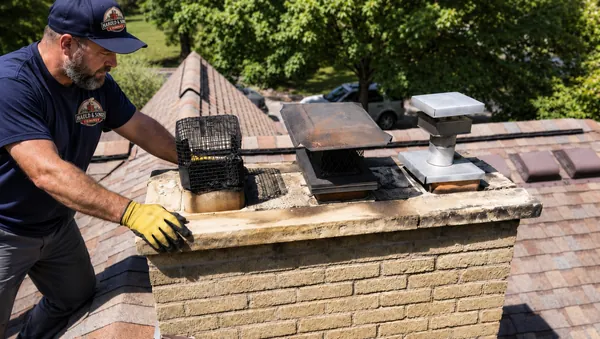
A prefabricated fireplace in a Milford or Southington home may be enclosed by a tall framed chase that looks substantial from the street. Its metal firebox, listed chimney components, and chase cover require a model-specific assessment; a masonry crown or clay-tile repair recommendation would address a different system. If the chase reaches a steep roof, ask how the technician will inspect its top without treating a ground-level photo as proof of interior condition. Check for water traces around the fireplace and along accessible chase surfaces. A missing refractory panel and a rusted cover may both need attention, but the approved replacement part for the firebox is determined by its manufacturer, not by the town or the apparent height of the chimney.
Is a cracked prefab panel always a full replacement? No. The answer depends on the panel, model, availability of an approved part, and condition of the rest of the fireplace.
Can a mason patch the metal unit? A masonry repair approach is not automatically appropriate for an engineered factory-built system. Identify the appliance and consult its instructions.
Why is water staining near the fireplace relevant? Water may have entered through the chase top or roof detail and damaged components inside the enclosure. The source needs attention as well as the stain.
Can I install a gas log set in any prefab fireplace? No. The fireplace and the specific gas product must allow the proposed configuration, with appropriate installation by qualified people.
What if the manufacturer no longer sells a part? Ask for documentation of the model and parts inquiry and an explanation of the safe options for that installation.
Harold & Sons Chimney serves New Haven and surrounding Connecticut communities from Stamford toward Hartford. For help identifying a unit or discussing prefabricated fireplace repair, call 475-270-6677 or use the form below. Include a photo of the model plate if you have it.
If this sounds like your situation, these pages explain the work involved.
Keep reading
A gas pilot fails in your Connecticut fireplace? Identify the model and vent route, record the symptom, and le…
Black marks by a gas vent in a Connecticut home need model-specific evaluation. Photograph the vent and learn …
An older gas fireplace in Connecticut may be repairable. Check the model, approved parts, vent route, and comp…
Chimney season is here
Tell us what you’ve seen — a stain, a smell, smoke in the room, or just a flue that hasn’t been checked in years. We start with the problem, not a sales pitch.
475-270-6677